
Comprehensive Guide to Passive House Design Principles
A detailed guide for architects and builders on passive house design principles, emphasizing energy-efficient practices and methods.
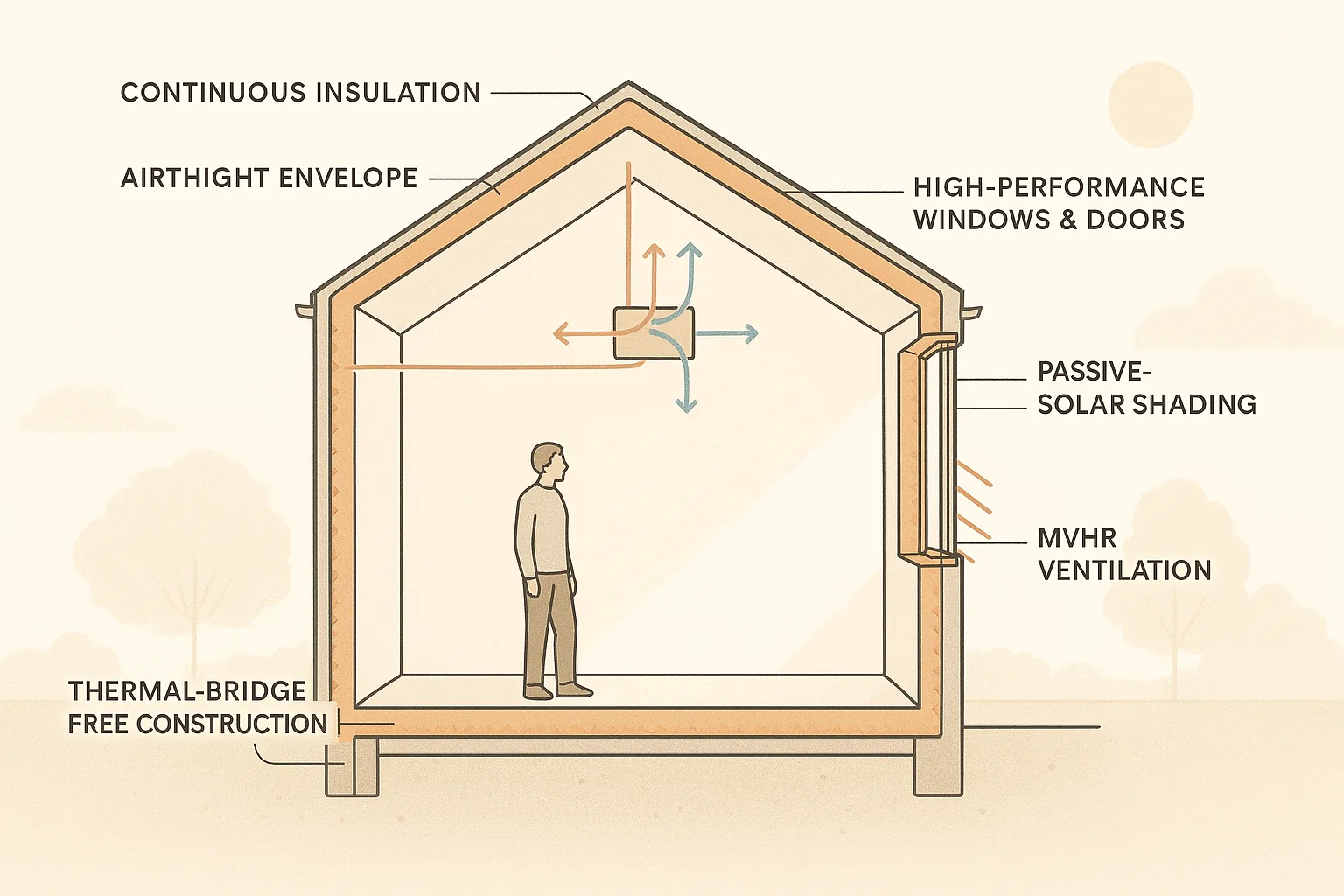
Passive house design principles are at the forefront of sustainable architecture, offering a blueprint for creating energy-efficient, comfortable, and environmentally friendly homes. In this comprehensive guide, we delve into the core principles that define passive house design, from continuous insulation and airtight envelopes to high-performance windows and doors. By understanding these foundational elements, architects, designers, builders, and homeowners can make informed decisions that enhance both the performance and sustainability of residential projects. This guide will walk you through each principle, providing detailed insights into how they contribute to minimizing energy consumption while maximizing indoor comfort.
Whether you're an architect looking to incorporate passive house principles into your projects or a homeowner eager to reduce energy bills and carbon footprint, this guide offers practical advice and expert tips. Learn about the importance of thermal-bridge-free construction and how mechanical ventilation with heat recovery (MVHR) systems play a crucial role in maintaining indoor air quality. Discover how passive solar orientation and strategic shading can harness natural energy, and explore the role of compact form in efficient design. We also address common design mistakes, cost and performance trade-offs, and provide a practical checklist to ensure your project meets passive house standards. By the end of this guide, you'll have a comprehensive understanding of when and why passive house design is worth it, equipping you with the knowledge to create spaces that are not only energy-efficient but also a joy to live in.
Introduction to Passive House Design
Passive House design represents a rigorous standard for energy efficiency in a building, reducing its ecological footprint. It results in ultra-low energy buildings that require little energy for space heating or cooling. The design principles of a Passive House are rooted in five essential concepts: continuous insulation, an airtight envelope, high-performance windows and doors, thermal bridge-free construction, and mechanical ventilation with heat recovery (MVHR).
Continuous Insulation
Continuous insulation is critical in Passive House design, as it ensures that the thermal envelope of the building is consistent and uninterrupted. This means that the insulation layer should be continuous across all structural elements, including walls, roofs, and floors. The recommended R-values will vary depending on the climate zone, but typically range from R-40 to R-60 for walls, and R-60 to R-100 for roofs. The key is to eliminate thermal bridges, where heat can escape, by using materials like rigid foam, spray foam, or mineral wool insulation.
Airtight Envelope
An airtight envelope prevents unwanted air infiltration and exfiltration, which can significantly affect the building's energy efficiency. Achieving high levels of airtightness requires meticulous attention to detail during construction. The Passive House standard typically requires an airtightness level of 0.6 air changes per hour at 50 Pascals (ACH50). This is often tested using a blower door test, which pressurizes the building to measure air leakage.
High-Performance Windows and Doors
Windows and doors are often the weakest points in a building's thermal envelope. In Passive House design, high-performance windows and doors are crucial. These typically feature triple glazing, low-emissivity coatings, and argon or krypton gas fills to minimize heat transfer. The frames should be insulated and have a thermal break to further reduce thermal bridging.
Thermal Bridge-Free Construction
Thermal bridges occur when materials that are poor insulators allow heat to bypass the insulation layer. In Passive House design, every effort is made to eliminate these bridges. This can be achieved by using thermal breaks in structural elements, such as balconies or cantilevers, and ensuring that insulation is continuous and well-aligned.
Ventilation Systems
Mechanical ventilation with heat recovery (MVHR) is a cornerstone of Passive House design. These systems ensure a continuous supply of fresh air while recovering heat from the exhaust air to minimize energy loss. An MVHR system can recover up to 90% of the heat from outgoing air, significantly reducing heating demands.
By adhering to these principles, architects and builders can create buildings that not only perform exceptionally well in terms of energy efficiency but also provide superior comfort and air quality for occupants. For those interested in further exploring the integration of Passive House principles with other design strategies, cross ventilation in architecture offers additional insights.
Core Principles of Passive House Design
Passive House design is grounded in five core principles that work together to achieve superior energy efficiency and comfort. Understanding these principles is crucial for architects, designers, and builders aiming to create buildings that meet Passive House standards.
Continuous Insulation
Continuous insulation is a key component in minimizing heat loss and maintaining stable indoor temperatures. Unlike traditional construction methods that often have gaps or thermal bridges, Passive House design demands a continuous layer of insulation around the entire building envelope. This includes walls, roofs, and foundations.
For instance, walls should have a minimum insulation value of R-40, roofs R-60, and floors R-20, depending on the climate zone. Materials such as expanded polystyrene (EPS) or mineral wool are commonly used due to their high R-values and moisture resistance. The thickness of the insulation should be uniform and uninterrupted, even around windows and doors.
Airtight Envelope
Creating an airtight envelope is essential to prevent unwanted air infiltration, which can lead to heat loss and drafts. The goal is to achieve an airtightness of 0.6 air changes per hour at 50 Pascals (ACH50) or less. This requires meticulous sealing of all joints and penetrations using tapes, membranes, and sealants. Common mistakes include neglecting to seal around utility penetrations and window frames.
High-Performance Windows and Doors
Windows and doors in Passive House design are not just about aesthetics; they are crucial components of the building envelope. Typically, triple-glazed windows with low-emissivity coatings and insulated frames are used. These windows should have a U-value of 0.8 W/(m²K) or lower. Proper installation is vital to ensure that they align with the insulation layer and maintain the airtight seal.
Thermal Bridge-Free Construction
Thermal bridges occur when materials that conduct heat bypass the insulation layer, leading to energy loss. Passive House design eliminates these by using thermal breaks and ensuring that structural elements do not penetrate the insulation layer. For example, balcony supports should be thermally isolated from the main structure.
Mechanical Ventilation with Heat Recovery (MVHR)
A well-designed MVHR system is essential for maintaining indoor air quality while minimizing energy loss. These systems recover heat from outgoing stale air and use it to warm incoming fresh air, achieving efficiencies of over 75%. Proper duct sizing and layout are crucial to avoid noise and ensure efficient operation.
For further insights into optimizing ventilation in Passive House design, consider exploring cross ventilation in architecture: passive cooling strategies, diagrams, and design tips.

By adhering to these core principles, Passive House designs can achieve exceptional energy efficiency and comfort, making them a sustainable choice for modern residential projects.
Passive Solar Orientation and Shading
In passive house design, solar orientation and shading are crucial for optimizing energy efficiency. This involves strategically positioning the building to maximize solar gain in the winter and minimize it in the summer, thereby reducing the need for mechanical heating and cooling.
Solar Orientation
The primary goal of solar orientation is to align the building to capture the sun's energy effectively. In the northern hemisphere, this typically means orienting the building's longest axis east-west, with the majority of the glazing facing south. This orientation maximizes winter solar gain when the sun is lower in the sky. Conversely, in the southern hemisphere, the building should be oriented to the north.
To achieve optimal solar gain, the angle of the roof and the size of the windows must be carefully calculated. The ideal roof pitch for solar panels, which can also impact passive solar gain, is typically between 30 to 45 degrees, depending on the latitude. Windows should be large on the south-facing side to allow sunlight to penetrate deeply into the interior during winter months. However, it's crucial to balance this with the risk of overheating in summer.
Shading Strategies
Effective shading is essential to prevent overheating during the summer. Fixed shading devices like overhangs can be designed to block high summer sun while allowing lower winter sun to enter. The depth of these overhangs can be calculated using the formula: Overhang Depth = Window Height / (tan(Sun Angle at Noon)). This ensures that the overhang provides shade during peak sun angles in the summer.
Additionally, using deciduous trees or trellises with climbing plants can provide seasonal shading. These natural solutions offer shade in the summer while allowing sunlight through in the winter once leaves have fallen.
Common Mistakes
One common mistake in passive solar design is over-reliance on large south-facing windows without adequate shading. This can lead to significant overheating and discomfort during summer months. Another error is failing to consider the thermal mass of interior materials, which can absorb and store solar energy during the day and release it at night, aiding in temperature regulation.
Trade-offs and Considerations
While optimizing solar orientation and shading can significantly reduce energy costs, it may conflict with other design priorities, such as views or site constraints. It's essential to balance these factors to achieve a design that meets both energy efficiency and aesthetic goals. For more on integrating these principles into a cohesive design, see the essential guide to simple house.

In conclusion, careful consideration of passive solar orientation and shading can lead to substantial energy savings and increased comfort in passive houses. By understanding and applying these principles, architects and builders can create homes that are not only energy-efficient but also in harmony with their natural environment.
For further reading on passive cooling strategies, explore cross ventilation in architecture: passive cooling strategies, diagrams, and design tips.
Airtightness and Thermal Bridging
Achieving airtightness and minimizing thermal bridging are critical components of passive house design. An airtight envelope prevents unwanted air exchange, which can lead to energy loss and discomfort. Meanwhile, thermal bridges, which are areas where heat can easily flow through the building envelope, need to be minimized to prevent heat loss and condensation issues.
Achieving Airtightness
-
Material Selection: Choose materials that are inherently airtight. This includes membranes, tapes, and sealants specifically designed for airtight applications. For example, vapor-permeable membranes can be used on the exterior, while interior membranes focus on airtightness.
-
Continuous Layer: Ensure the airtight layer is continuous across the entire building envelope. This involves careful detailing around penetrations such as windows, doors, and service entries. Use airtight tapes and gaskets to seal joints and connections.
-
Testing: Conduct blower door tests at various stages of construction to identify leaks. The Passive House standard requires a maximum air leakage of 0.6 air changes per hour at 50 Pascals (ACH50). Testing early allows for corrections before finishes are applied.
-
Training: Ensure all construction team members are trained in airtight construction techniques. Miscommunication or lack of knowledge can lead to significant airtightness failures.
Minimizing Thermal Bridging
-
Design Considerations: At the design stage, identify potential thermal bridges, such as structural elements that penetrate the insulation layer. Use thermal modeling software to predict heat flow and adjust designs accordingly.
-
Insulation: Implement continuous insulation strategies. For example, use external insulation systems that wrap around the entire building, including the edges of floor slabs and roof eaves.
-
Thermal Breaks: Incorporate thermal breaks in structural elements. This can be achieved by using materials with low thermal conductivity, like plastic spacers or thermal break pads, in areas such as balcony connections or steel beams.
-
Detailing: Pay attention to construction details, especially at junctions between different building components. Poor detailing can create thermal bridges, undermining the effectiveness of the insulation.
Common Mistakes and Trade-offs
-
Ignoring Small Gaps: Even small gaps can significantly impact airtightness. Every joint and penetration must be sealed meticulously.
-
Overcomplicating Details: Complex details can increase the risk of errors. Simplicity in design often leads to better performance.
-
Cost vs. Performance: While achieving high levels of airtightness and minimizing thermal bridging can increase upfront costs, the energy savings and comfort improvements often justify the investment. Consider the long-term benefits and potential energy cost reductions.
For more insights on sustainable architectural practices, explore embodied carbon in architecture.

Windows and Doors: High Performance
Selecting high-performance windows and doors is crucial for achieving the energy efficiency goals of a passive house. These elements not only contribute to the building's thermal envelope but also significantly impact its overall energy consumption and indoor comfort levels.
Key Considerations
-
U-Value and Solar Heat Gain Coefficient (SHGC): The U-value measures the rate of heat transfer and is crucial for minimizing heat loss. For passive houses, windows should have a U-value of 0.8 W/(m²K) or lower. The SHGC indicates how much solar radiation is admitted through a window; a balance is necessary to optimize passive solar gain without overheating.
-
Glazing Options: Triple glazing is often recommended for passive houses due to its superior insulation properties compared to double glazing. It significantly reduces heat loss and improves sound insulation, which is particularly beneficial in urban areas.
-
Frame Materials: The choice of frame material affects both thermal performance and durability. Aluminum frames, while sleek, require a thermal break to prevent heat transfer. Wood frames offer excellent insulation but need regular maintenance. Composite frames, combining wood and aluminum, provide a good balance of insulation and low maintenance.
-
Airtightness: Proper installation is essential to maintain the airtightness of the building envelope. Windows and doors should be sealed with high-quality gaskets and tapes to prevent air leakage. This is crucial not only for energy efficiency but also for preventing moisture ingress that can lead to mold and structural damage.
-
Orientation and Shading: Strategic placement of windows can enhance passive solar heating. South-facing windows maximize solar gain in the northern hemisphere, while appropriate shading solutions, such as overhangs or external blinds, prevent overheating in summer.
Common Mistakes
-
Ignoring Local Climate: Selecting windows without considering the local climate can lead to inefficiencies. For instance, high SHGC windows are beneficial in colder climates but may cause overheating in warmer areas.
-
Overlooking Installation Details: Even the best windows can underperform if not installed correctly. It's essential to follow manufacturer guidelines and consider factors like thermal bridging at the frame.
-
Neglecting Maintenance: Regular checks and maintenance of seals and frames are vital for long-term performance.
For more insights into creating efficient living spaces, explore the ultimate guide to minimalist house which complements passive house principles by emphasizing simplicity and functionality. Additionally, understanding cross ventilation in architecture: passive cooling strategies, diagrams, and design tips can further enhance your home's energy efficiency.
By carefully selecting and installing high-performance windows and doors, you can significantly enhance the energy efficiency and comfort of a passive house, ensuring it meets both environmental and occupant needs effectively.
MVHR/HRV Ventilation Systems
Mechanical Ventilation with Heat Recovery (MVHR) or Heat Recovery Ventilation (HRV) systems are integral to maintaining optimal indoor air quality in Passive House designs. These systems ensure a continuous supply of fresh air while recovering heat from outgoing stale air, significantly reducing energy loss.
Key Components and Specifications
An MVHR system typically consists of a heat exchanger, supply and extract fans, ductwork, and filters. The heat exchanger is the core component, where the heat from the stale outgoing air is transferred to the incoming fresh air, without mixing the two air streams. High-efficiency models can achieve heat recovery rates of over 90%, meaning they can reclaim 90% of the heat from the air being expelled.
For effective performance, the system should be correctly sized according to the building's volume and occupancy. A general rule of thumb is to provide 0.3-0.5 air changes per hour, but this can vary based on specific building codes and standards.

Installation Considerations
Ductwork Layout: Proper planning of duct routes is crucial to minimize pressure losses and ensure efficient airflow. Ducts should be as straight as possible, with gentle bends and smooth internal surfaces to reduce resistance.
Location of Units: The MVHR unit should be located in a central area to minimize duct lengths. This can often be in a utility room or a dedicated plant room.
Noise Control: Select low-noise models and consider soundproofing around the unit to prevent operational noise from affecting living spaces.
Maintenance Access: Ensure easy access for filter changes and maintenance. Filters should be replaced or cleaned every 3-6 months to maintain air quality and system efficiency.
Trade-offs and Common Mistakes
Energy Usage vs. Air Quality: While MVHR systems are energy-efficient, they do consume electricity. Designers must balance the energy savings from heat recovery against the energy used by the system itself. Efficient models with low Specific Fan Power (SFP) can help optimize this balance.
Over-Specification: Oversizing the system can lead to unnecessary energy consumption and increased costs. Accurate calculation of the building's ventilation needs is essential to avoid this mistake.
Poor Duct Insulation: Inadequate insulation of ducts can lead to heat loss and condensation issues. Use high-quality insulation materials to prevent these problems.
For more insights on optimizing ventilation in architectural design, explore cross ventilation in architecture: passive cooling strategies, diagrams, and design tips. Additionally, consider how MVHR systems can be integrated with other sustainable building practices, such as those outlined in embodied carbon in architecture: complete guide for architects.
By carefully considering these factors, architects and builders can effectively integrate MVHR/HRV systems into Passive House designs, ensuring both energy efficiency and superior indoor air quality.
Practical Checklist for Passive House Design
Designing a passive house requires meticulous attention to detail and adherence to specific principles to achieve the desired energy efficiency. This checklist serves as a practical guide for architects and builders embarking on passive house projects.
-
Site Analysis and Orientation: Conduct a thorough site analysis to optimize solar gain. Position the building with the longest façade facing south (in the northern hemisphere) to maximize winter solar heat gain. Avoid shading from neighboring structures and vegetation.
-
Continuous Insulation: Ensure that the building envelope is wrapped in continuous insulation without breaks. Use materials with high R-values, such as rigid foam boards or spray foam, to achieve a minimum R-value of R-40 for walls and R-60 for roofs, depending on the climate zone.
-
Airtight Envelope: Achieve an airtight building envelope by sealing all joints, seams, and penetrations. Aim for an air change rate of no more than 0.6 ACH50 (air changes per hour at 50 pascals). Use blower door tests to identify and rectify leaks.
-
Thermal Bridge-Free Construction: Design details to eliminate thermal bridges, which are paths for heat loss. Use thermal breaks in structural elements and ensure window and door frames are insulated and aligned with the wall insulation.
-
High-Performance Windows and Doors: Select triple-glazed windows with low-emissivity coatings and insulated frames. Ensure U-values are below 0.15 W/(m²K). Properly install to minimize air leakage and thermal bridging.
-
Ventilation Systems: Implement a Mechanical Ventilation with Heat Recovery (MVHR) system to provide fresh air while recovering heat from exhaust air. Ensure the system is balanced and ducts are insulated.
-
Shading and Overhangs: Design shading devices to prevent overheating in summer while allowing solar gain in winter. Adjustable external shading or deep overhangs can be effective.
-
Compact Building Form: Design a compact building form to minimize the surface area exposed to the outside, reducing heat loss. Consider the ultimate guide to minimalist house design for inspiration.
-
Material Selection: Choose materials with low embodied energy and high durability. Consider using reclaimed materials as outlined in architectural salvage.
-
Cost and Performance Trade-offs: Balance upfront costs with long-term savings. While high-performance materials may be more costly initially, they contribute to significant energy savings over time.
-
Common Mistakes: Avoid common pitfalls such as inadequate site analysis, poor detailing at junctions, and underestimating the importance of airtightness. Ensure all team members are trained in passive house standards.
By following this checklist, architects and builders can ensure that their passive house projects meet performance goals and contribute to sustainable living.
Common Design Mistakes and Trade-offs
Designing a passive house requires a meticulous approach to ensure that the building meets the rigorous standards for energy efficiency and comfort. However, even experienced architects and builders can fall prey to common design mistakes that compromise the effectiveness of passive house principles.
Inadequate Airtightness
One of the most frequent errors in passive house design is failing to achieve the required level of airtightness. The airtight envelope is crucial for minimizing heat loss and controlling ventilation. To avoid this mistake, ensure that all joints, seams, and penetrations are sealed with high-quality tapes and membranes. Conducting a blower door test during construction can identify leaks early, allowing for corrections before the project is completed.
Misjudging Insulation Requirements
Another common pitfall is underestimating the amount of insulation needed. Continuous insulation is a cornerstone of passive house design, and skimping on insulation can lead to thermal bridging and increased energy consumption. Use materials with a high R-value and ensure that insulation is installed without gaps or compression. Consider using the essential guide to simple house design for insights into selecting appropriate insulation materials.
Poor Window Placement and Specification
Windows are both a source of heat gain and loss. Incorrectly specified or placed windows can lead to overheating in summer or excessive heat loss in winter. High-performance windows with low U-values and appropriate solar heat gain coefficients (SHGC) are essential. Additionally, strategic placement to optimize passive solar gain while minimizing glare and overheating is critical.
Ignoring Thermal Bridges
Thermal bridges are areas where heat bypasses insulation, often occurring at junctions between different building elements. Designing thermal bridge-free construction requires careful detailing at these junctions. Use thermal breaks and ensure continuity of insulation across all building elements.
Overlooking Ventilation System Design
A well-designed mechanical ventilation with heat recovery (MVHR) system is essential for maintaining indoor air quality and energy efficiency. A common mistake is undersizing the ventilation system, leading to inadequate air exchange. Ensure that the system is appropriately sized and that ductwork is sealed and insulated to prevent energy loss.
Cost vs. Performance Trade-offs
Balancing cost and performance is a challenge in passive house design. While high-performance materials and systems can be more expensive initially, they often result in lower operational costs and increased comfort. It's important to assess long-term savings and environmental impact when making design decisions. For additional guidance on sustainable materials, consider exploring architectural salvage: the complete guide to reclaimed building materials.
By understanding these common design mistakes and trade-offs, architects and builders can better navigate the complexities of passive house design, ensuring that projects meet both performance and budgetary goals.
When is Passive House Design Worth It?
Investing in Passive House design can be a significant commitment, both financially and in terms of time and resources. However, there are specific scenarios where this approach is particularly advantageous. Understanding these situations can help homeowners, architects, and builders make informed decisions.
Climate Considerations
Passive House design is especially beneficial in climates with extreme temperatures, whether hot or cold. The rigorous standards of airtightness and insulation significantly reduce the need for active heating or cooling systems, leading to substantial energy savings. For instance, in colder climates, the high-performance insulation and thermal bridge-free construction prevent heat loss, maintaining a stable indoor temperature without excessive heating.
Long-Term Cost Efficiency
While the initial investment for a Passive House can be higher than traditional construction—often 5-10% more—this cost is typically offset by the reduced energy bills over time. Homeowners can expect a return on investment within 10-15 years due to savings on energy costs. Moreover, the use of durable materials and systems designed to last longer than conventional alternatives reduces maintenance expenses.
Environmental Impact
For those prioritizing environmental sustainability, Passive House design is a compelling choice. It significantly reduces a building's carbon footprint by minimizing energy consumption and maximizing the use of renewable energy sources. This is particularly relevant for projects aiming for certifications like LEED or BREEAM, where energy efficiency is a key component.
Health and Comfort
Passive Houses provide superior indoor air quality due to their advanced ventilation systems, such as Mechanical Ventilation with Heat Recovery (MVHR). This system ensures a constant supply of fresh air while retaining heat, which is crucial for maintaining comfort and health. The consistent temperature and humidity levels also contribute to a more comfortable living environment.
Resale Value
Properties built to Passive House standards often have a higher resale value due to their energy efficiency and sustainability credentials. Buyers are increasingly aware of the benefits of such homes, including lower running costs and environmental impact, making them more attractive in the real estate market.
Potential Trade-offs
Despite the benefits, there are trade-offs to consider. The design process can be more complex, requiring precise calculations and simulations to meet the standards. Additionally, sourcing materials and skilled labor can be more challenging, potentially leading to longer construction timelines.
For those exploring minimalist or innovative housing solutions, the ultimate guide to minimalist house design offers insights that can complement Passive House principles, particularly in optimizing space and reducing unnecessary energy use.
In conclusion, while Passive House design may not be suitable for every project, it offers significant advantages in the right context, particularly for those committed to sustainability, long-term cost savings, and high-quality living environments.
Frequently Asked Questions
What is a Passive House?
A Passive House is a building standard that is energy efficient, comfortable, affordable, and ecological at the same time. It focuses on reducing the building's ecological footprint by utilizing five core design principles to achieve significant energy savings.
Why is airtightness important in Passive House design?
Airtightness is crucial because it minimizes unwanted air leakage, which can lead to heat loss and reduced energy efficiency. By ensuring a tightly sealed building envelope, Passive Houses maintain consistent indoor temperatures and improve overall energy performance.
How do high-performance windows and doors contribute to Passive House standards?
High-performance windows and doors reduce heat loss and solar gain, helping to maintain a stable indoor climate. They are essential for achieving the energy efficiency goals of Passive Houses by providing excellent insulation and airtightness.
What role does MVHR/HRV ventilation play in a Passive House?
MVHR (Mechanical Ventilation with Heat Recovery) or HRV (Heat Recovery Ventilation) systems provide fresh air while recovering heat from outgoing air. This process maintains indoor air quality and temperature without significant energy loss, crucial for the energy efficiency of Passive Houses.
Are Passive Houses more expensive to build than traditional homes?
Initially, Passive Houses can be more expensive due to higher quality materials and systems. However, they often result in lower energy bills and maintenance costs over time, offering financial benefits in the long run.
Can existing homes be retrofitted to meet Passive House standards?
Yes, existing homes can be retrofitted to meet Passive House standards, though it can be challenging. Retrofitting involves upgrading insulation, windows, and ventilation systems, and addressing airtightness and thermal bridges to achieve the desired energy efficiency.
References and Further Reading
-
[International Passive House Association
-
Passive House Principles](https://passivehouse-international.org/index.php?page_id=150)
-
[International Code Council
-
2021 International Energy Conservation Code (IECC)](https://codes.iccsafe.org/content/IECC2021P1)
-
[ASHRAE
-
Standard 90.1: Energy Standard for Buildings Except Low-Rise Residential Buildings](https://www.ashrae.org/technical-resources/bookstore/standard-90-1)
-
[U.S. Department of Energy
-
Guide to Passive Solar Home Design](https://www.energy.gov/energysaver/passive-solar-home-design)
-
[PHIUS
-
Passive Building Standards](https://www.phius.org/phius-certification-for-buildings-products/phius-2018-passive-building-standard)
-
[ArchStacks
-
Cross Ventilation in Architecture: Passive Cooling Strategies, Diagrams, and Design Tips](https://archstacks.com/guides/cross-ventilation-architecture)
-
[ArchStacks
-
Embodied Carbon in Architecture: Complete Guide for Architects](https://archstacks.com/guides/embodied-carbon-architecture)