
Under Stair Storage Ideas: Smart Ways to Turn Dead Space Into Useful Space
A practical architectural guide to under stair storage, showing how to turn awkward leftover space into drawers, cupboards, shoe storage, bookshelves, pantries, work nooks, and hidden built-ins.
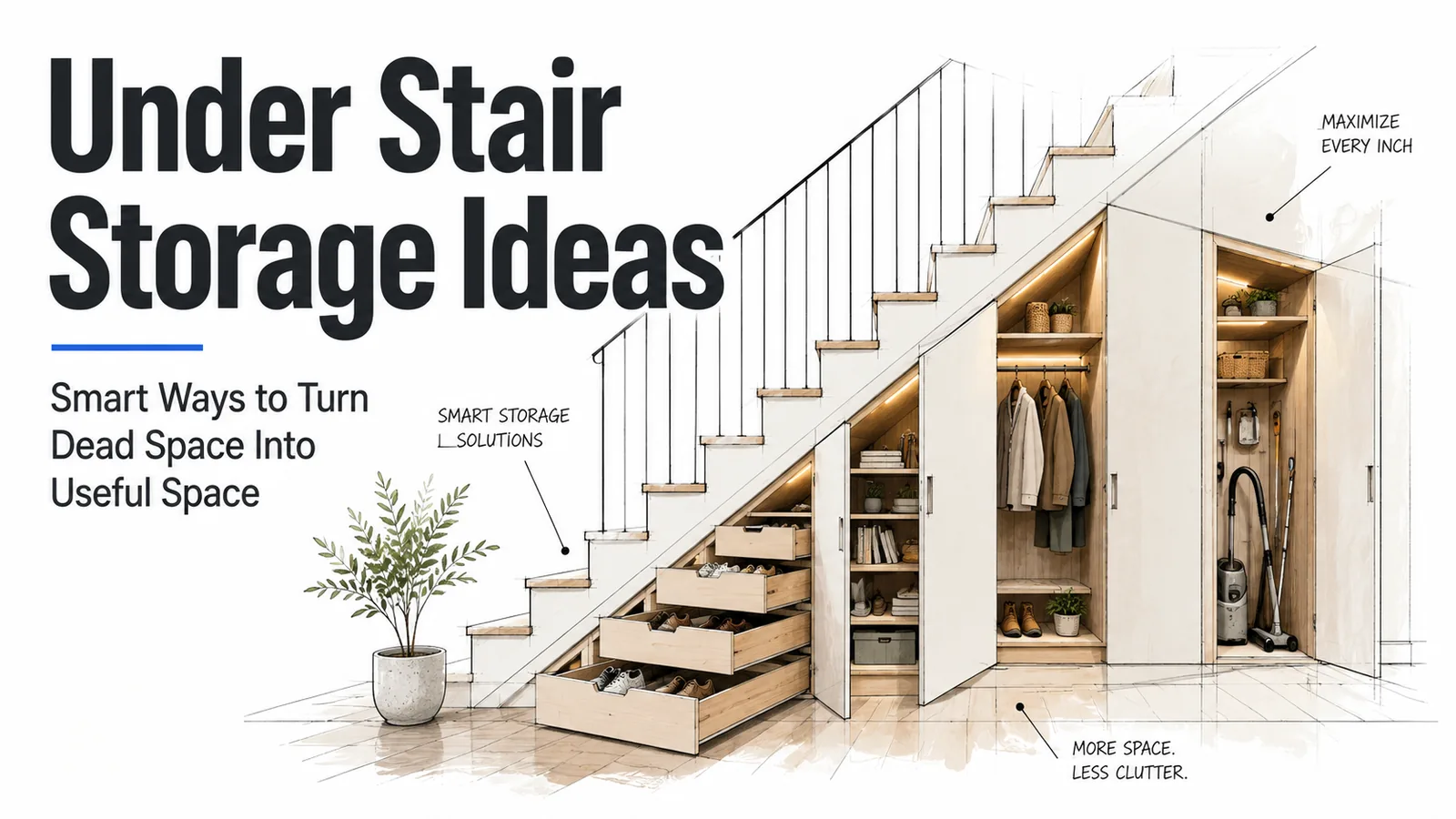
Under stair storage is one of the smartest ways to use space that is usually ignored.
The area below a staircase is often awkward, triangular, low, and difficult to furnish. But with the right design, it can become one of the most practical parts of the home.
It can work as shoe storage, a coat closet, a hidden cupboard, a small pantry, a bookshelf, a home office nook, a pet corner, or a set of deep pull-out drawers.
The goal is not just to fill the space. The goal is to design it around how the house is actually used every day.
Good under stair storage should make the home feel calmer, cleaner, and easier to use.
Why Under Stair Storage Is So Useful
The space under the stairs is usually close to important circulation areas such as the entrance, hallway, living room, or kitchen. This makes it perfect for daily-use storage.
Instead of placing extra cabinets around the house, the stair zone can absorb clutter without taking more floor area.
Good under stair storage can help organize shoes, coats, bags, books, toys, cleaning supplies, pantry items, tools, pet items, and seasonal objects.
This is why under stair storage works especially well in small homes, apartments, townhouses, and narrow interiors.
It also supports a bigger architectural idea: making leftover space work harder. Similar to compact kitchens, built-in furniture, and adaptive reuse, the best under stair designs turn an overlooked condition into a useful part of the interior.
Related guide: Architectural Salvage: How Old Building Materials Can Give New Life to Modern Design
Best Under Stair Storage Ideas at a Glance
| Idea | Best location | Best for |
|---|---|---|
| Pull-out drawers | Hallway or entrance | Shoes, bags, toys, seasonal items |
| Shoe storage | Entrance | Daily shoes and family clutter |
| Mudroom | Entrance | Coats, shoes, bags, school items |
| Coat closet | Tall side of stair | Jackets, bags, boots, cleaning tools |
| Hidden cupboards | Hallway or living room | Visual calm and concealed storage |
| Open shelving | Living room or hallway | Books, plants, display objects |
| Pantry | Near kitchen | Dry food, jars, appliances |
| Home office nook | Tall side of stair | Laptop work, study, emails |
| Reading nook | Living room or family area | Cozy seating and books |
| Pet space | Low stair zone | Dog bed, cat corner, pet supplies |
| Laundry or utility storage | Near services | Washing machine, baskets, cleaning supplies |
1. Pull-Out Drawers Under the Stairs
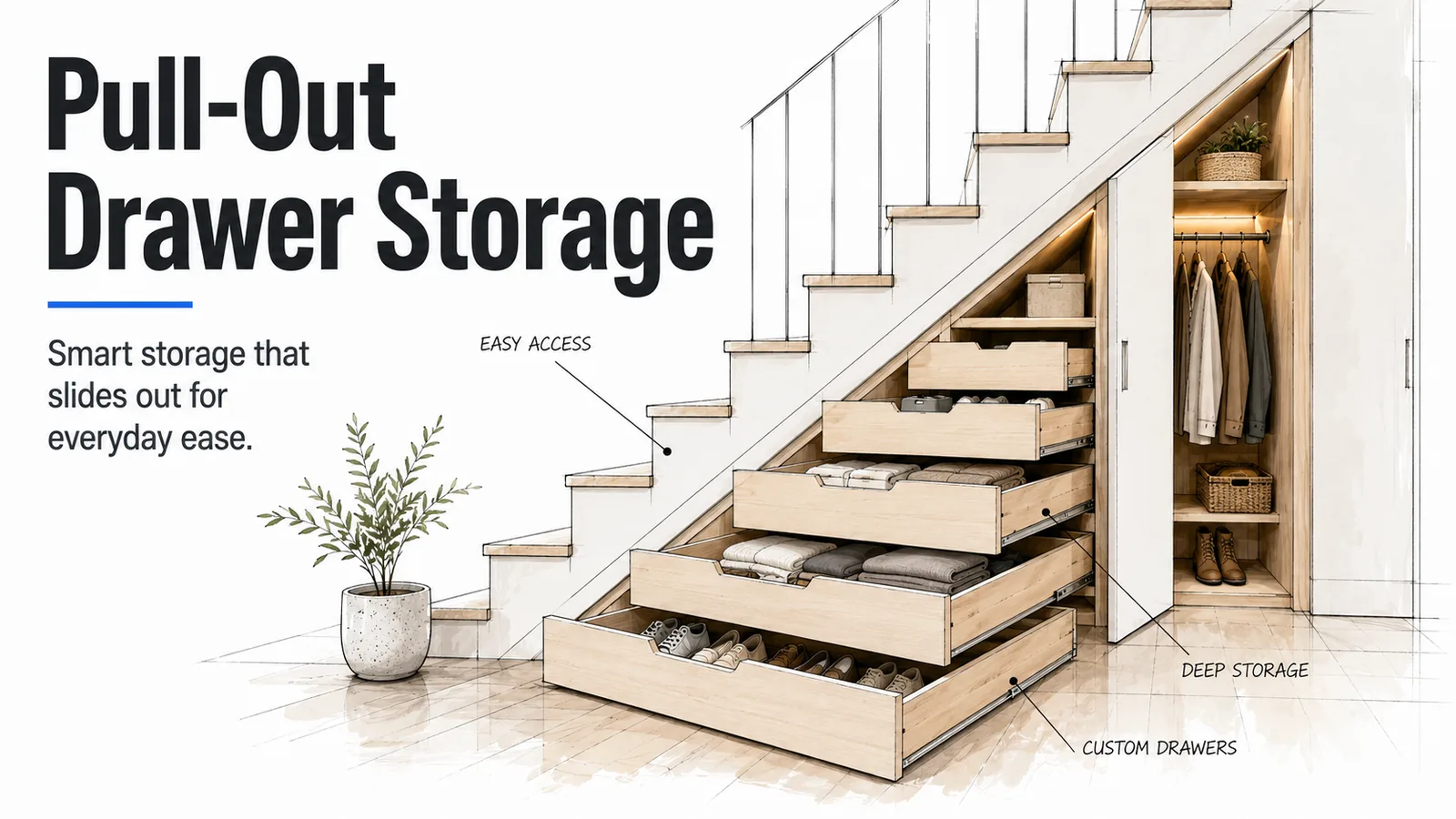
Pull-out drawers are one of the best under stair storage ideas because they make deep awkward space easy to access.
Instead of reaching into a dark cupboard, the drawer comes out toward you. This makes the full depth useful.
Pull-out drawers are ideal for shoes, bags, toys, sports equipment, folded textiles, seasonal items, and cleaning products.
The drawer fronts can follow the slope of the stairs for a clean built-in look. In modern interiors, handleless fronts can make the storage almost disappear into the wall.
For better function, avoid one huge drawer. Several medium-sized drawers are usually easier to open, organize, and maintain.
A good drawer system should also consider weight. Deep drawers can become heavy when filled with shoes, tools, books, or household items, so strong runners and proper joinery are important.
2. Under Stair Shoe Storage
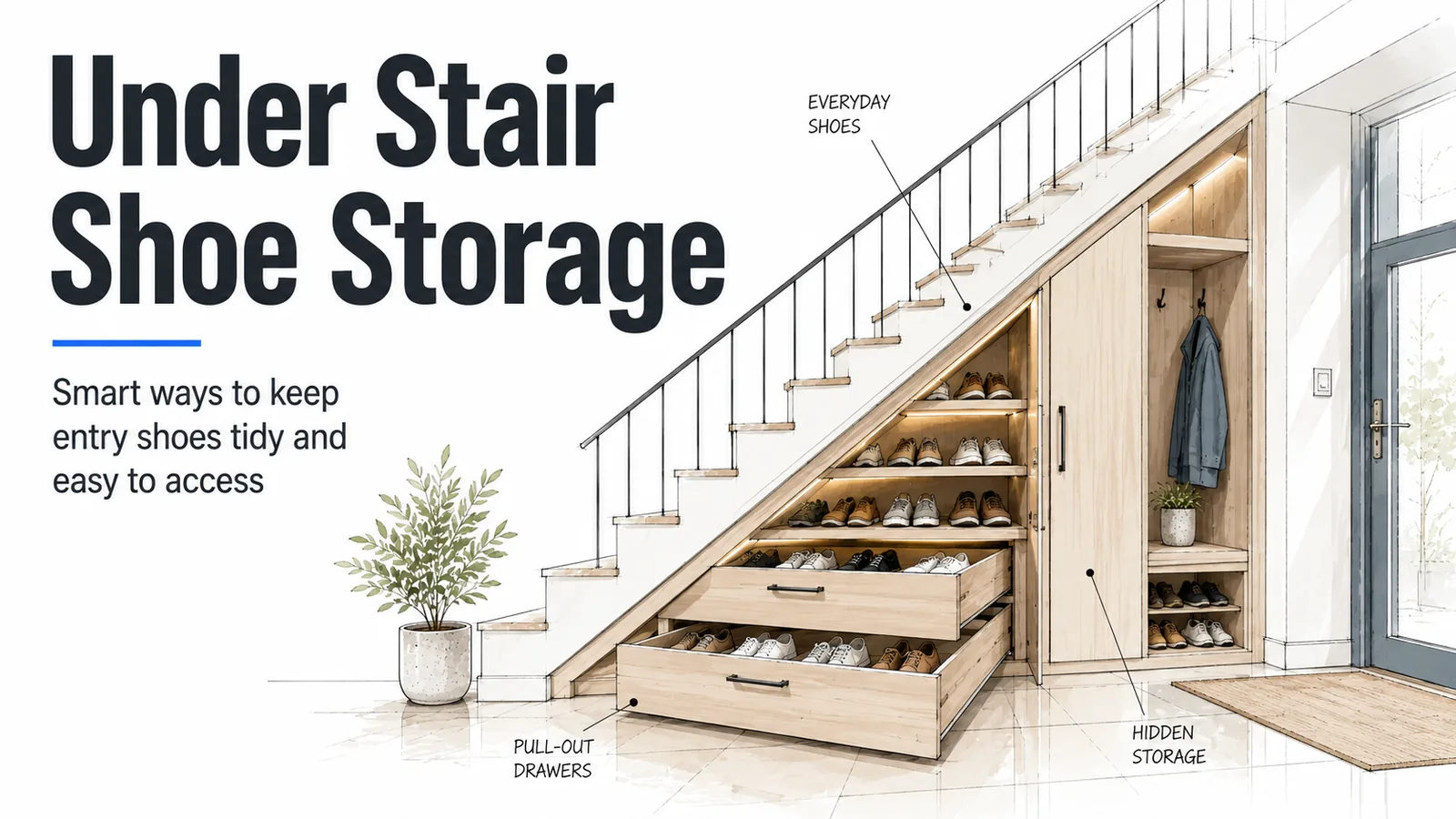
If the staircase is near the entrance, shoe storage is one of the most practical uses for the space.
Shoes often create visual clutter near the door. Under stair shoe storage solves this problem without needing a separate cabinet in the hallway.
You can use low drawers, angled shoe shelves, pull-out shoe racks, open daily-use shelves, or closed seasonal shoe storage.
For family homes, closed storage usually works better because it hides clutter. For smaller apartments, a mix of open and closed storage can be more practical.
A good entrance layout may include shoe drawers at the bottom, hooks for coats, a small bench, and a shelf for keys or bags.
This turns the staircase into a small mudroom rather than a wasted corner.
For daily use, keep the most-used shoes at the easiest height. Seasonal shoes can go deeper or higher inside closed storage.
3. Under Stair Mudroom
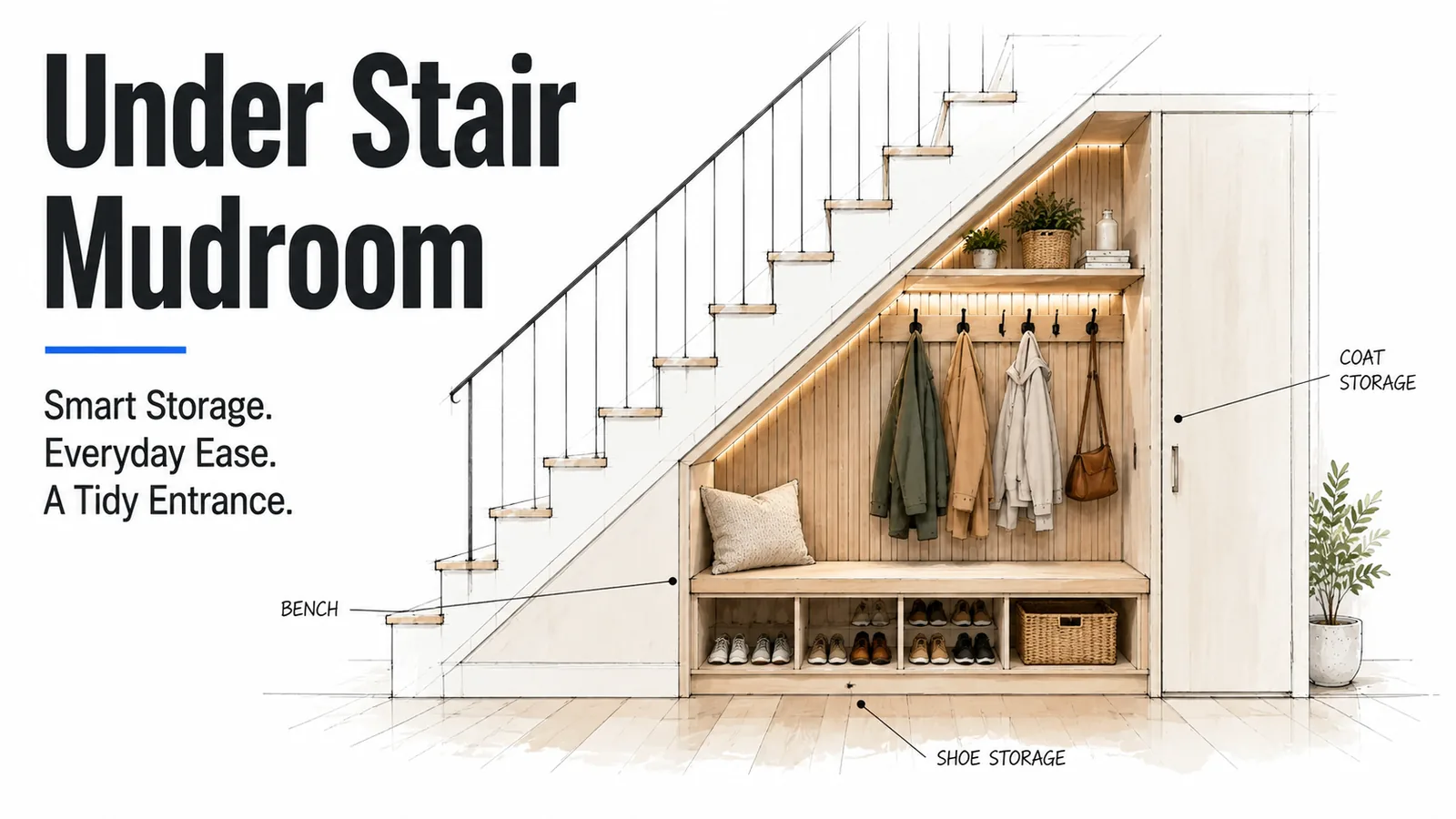
An under stair mudroom works especially well when the staircase is located near the entrance.
This is one of the most useful layouts for family homes because it gives every daily item a clear place.
A good under stair mudroom can include:
- A bench for sitting while wearing shoes
- Shoe cubbies below the bench
- Coat hooks on the taller wall
- A tall cupboard for bags and cleaning tools
- A shelf above for baskets
- LED lighting below the stair slope
The bench should be placed where the stair height feels comfortable. The lowest part of the stair can be used for shoes, baskets, or drawers, while the taller side can hold coats and vertical storage.
This type of storage makes the entrance feel more organized and reduces clutter in the rest of the house.
4. Under Stair Coat Closet
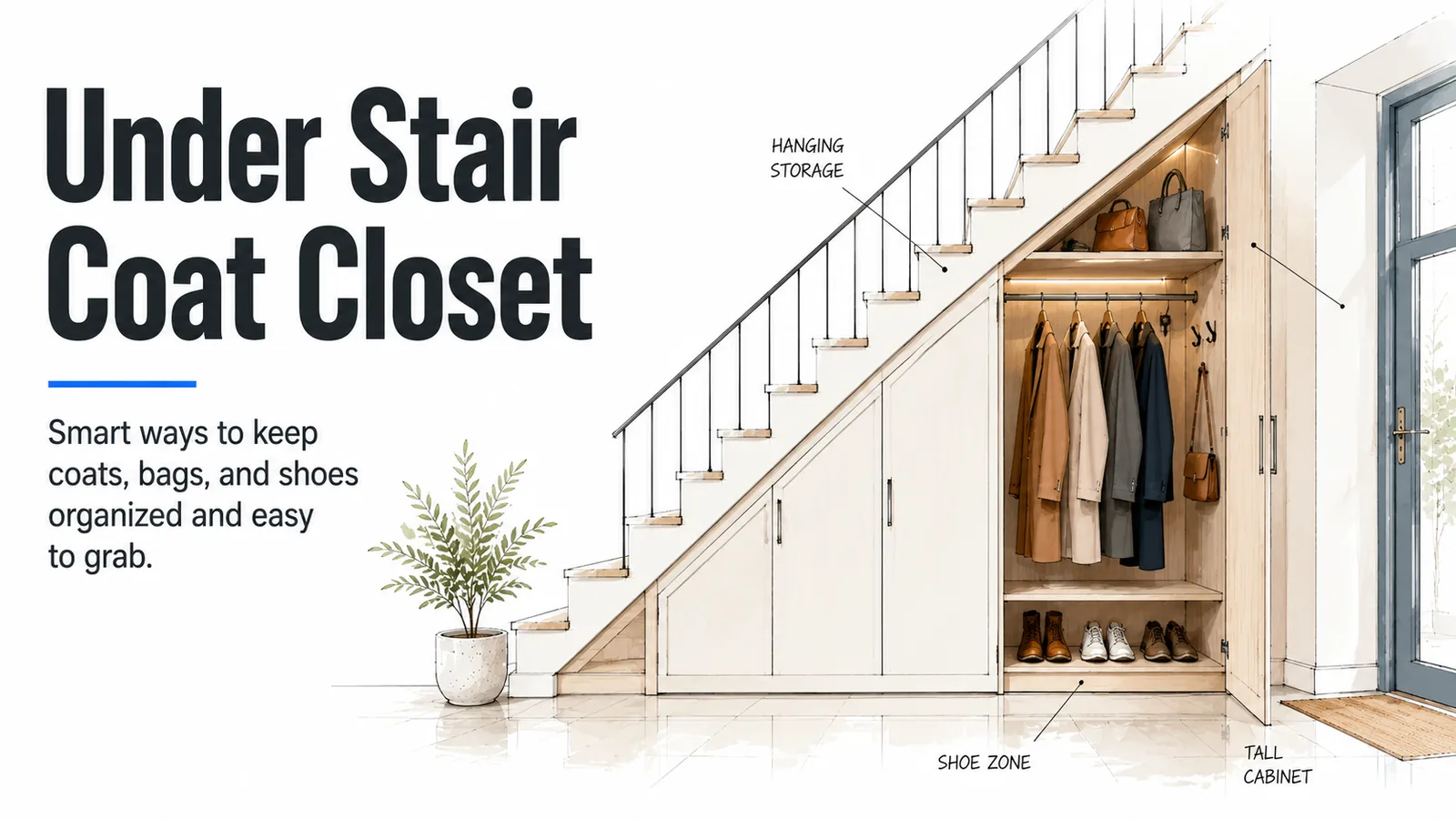
The taller side of the stair space is perfect for a coat closet.
This works especially well when the staircase is close to the entrance. Instead of adding a freestanding wardrobe, the coat storage can be built into the stair wall.
A good under stair coat closet can include a hanging rail, wall hooks, shoe zone below, upper shelf for bags, internal lighting, and a ventilation gap or grille.
Hooks are often better than a full hanging rail if the depth is limited. They are easier to use and work well for children.
This type of storage can turn a messy entrance into a calm and organized arrival area.
For closed coat storage, ventilation matters. Coats, shoes, and bags can carry moisture and smells, so the cupboard should not behave like a sealed box.
5. Hidden Under Stair Cupboards
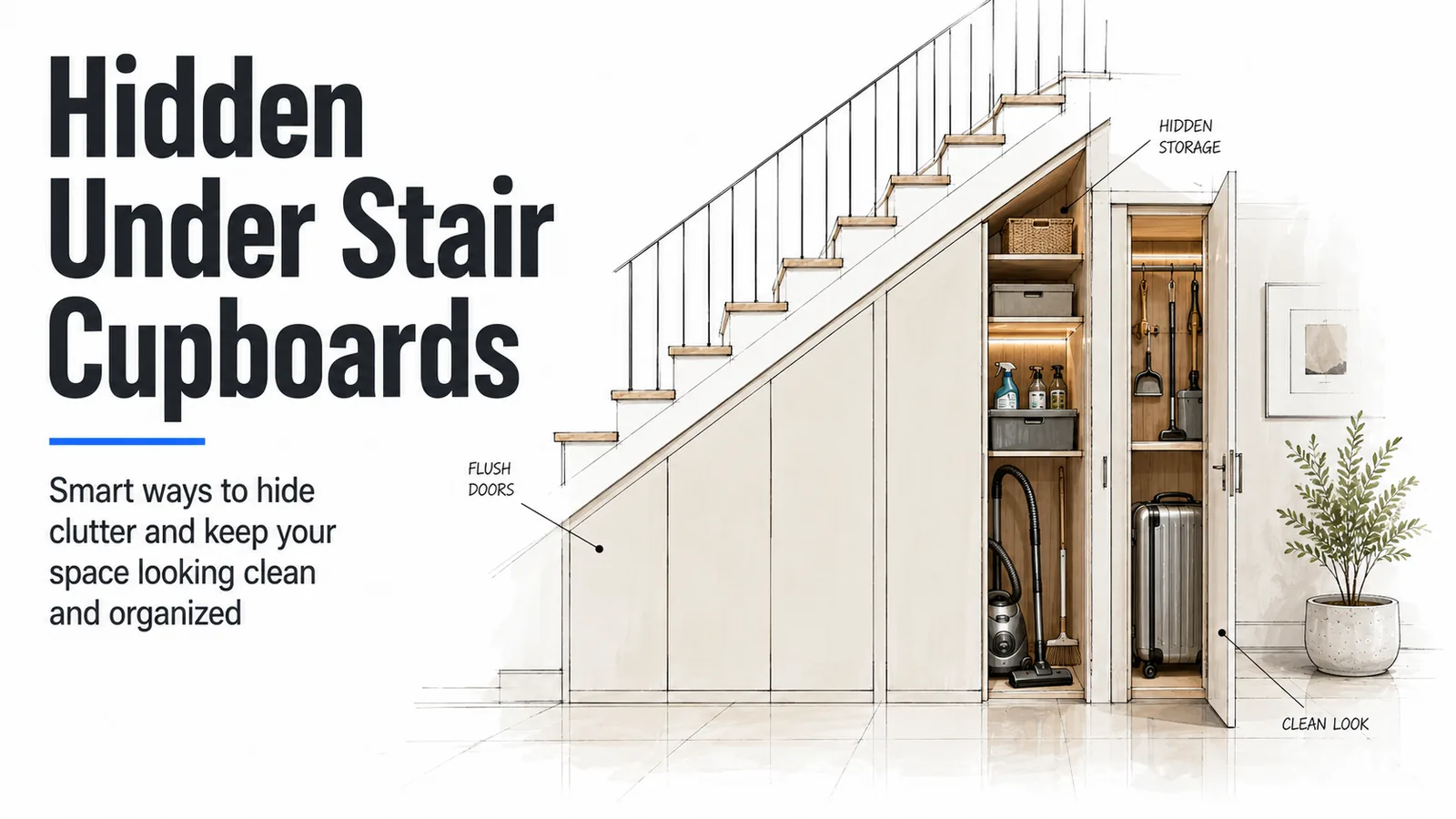
Hidden cupboards are perfect when you want the staircase area to look clean and simple.
The doors can be flush with the wall, painted the same color, or detailed as simple wall paneling. From the outside, the storage almost disappears.
Hidden under stair cupboards are useful for vacuum cleaners, tools, luggage, cleaning supplies, electrical items, seasonal decorations, and household clutter.
This idea works well in modern homes and narrow hallways where visual calm is important.
Use slim handles, recessed pulls, or push-to-open hardware. Avoid bulky handles because they can make the stair zone feel busy.
If the under stair cupboard is enclosed and accessible, check local building rules. For example, the International Residential Code includes under-stair protection requirements for enclosed accessible spaces, including protection with gypsum board on the enclosed side. Reference: ICC Digital Codes - IRC R302.7 Under-stair protection
6. Open Shelving Under the Stairs
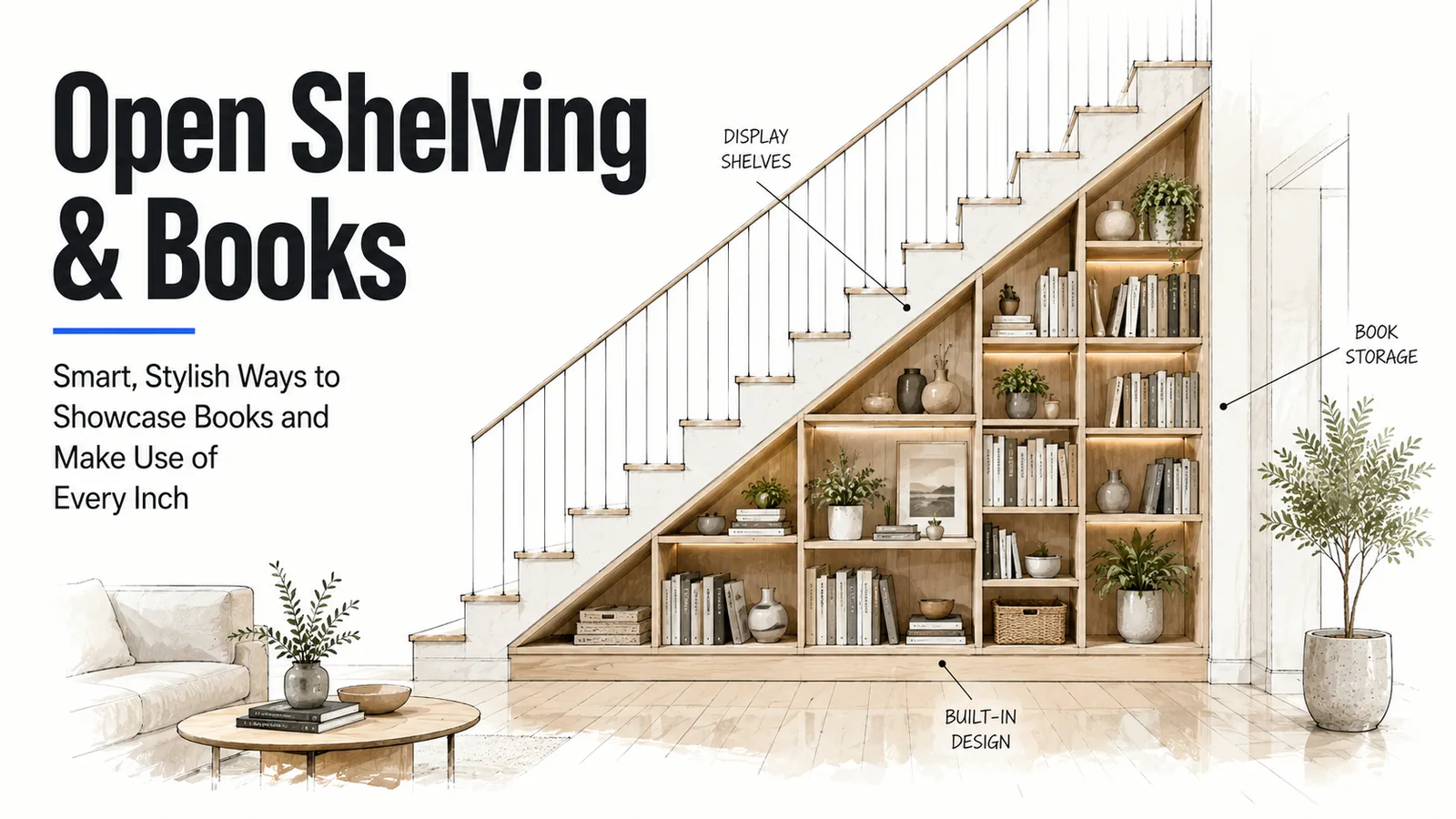
Open shelving is a good choice when the staircase is visible from the living room or hallway.
Instead of hiding the space, open shelves turn it into a display feature.
You can use the shelves for books, plants, art objects, baskets, ceramics, family photos, and small decorative items.
The shelves do not all need to be the same size. In fact, mixed shelf sizes often look better because they respond naturally to the triangular shape under the stairs.
For a stronger architectural look, align some shelf edges with the stair angle, wall lines, or nearby furniture.
Open shelving is also safer visually in narrow areas because it feels lighter than a full wall of closed cabinets. But it needs discipline. If every shelf becomes overloaded, the stair zone can quickly feel messy.
7. Under Stair Pantry

If the staircase is near the kitchen, the space below it can become a compact pantry.
This is useful in small homes where kitchen storage is limited.
An under stair pantry can store dry food, cans, jars, small appliances, cleaning refills, and extra kitchen supplies.
The biggest mistake is making the shelves too deep. Deep fixed shelves become messy because items disappear at the back.
For deeper spaces, pull-out pantry units or sliding baskets work much better.
Also, avoid using the under stair area as a pantry if it is damp, hot, or poorly ventilated.
Pantry storage should be easy to inspect and clean. Food storage works best when shelves are visible, shallow enough to access, and protected from moisture.
A good under stair pantry should feel more like an organized cabinet than a hidden dumping zone.
8. Under Stair Home Office Nook

A small desk under the stairs can work well if the space has enough height and light.
This is best for light work, studying, reading emails, or using a laptop. It is not always suitable as a full-time workstation, especially if the head height is too low.
A good under stair office nook should include a built-in desk, power outlet, task light, wall shelves, cable management, and comfortable chair space.
The desk should be placed on the taller side of the stair. The lower part can be used for drawers, files, or closed storage.
This idea works best when the staircase is near a living room, hallway, or quiet corner of the house.
If the space feels compressed, avoid forcing a desk into it. A bad office nook is worse than good storage.
For better comfort, keep the desktop clear, add a proper task light, and make sure the chair can move in and out without blocking circulation.
9. Under Stair Reading Nook
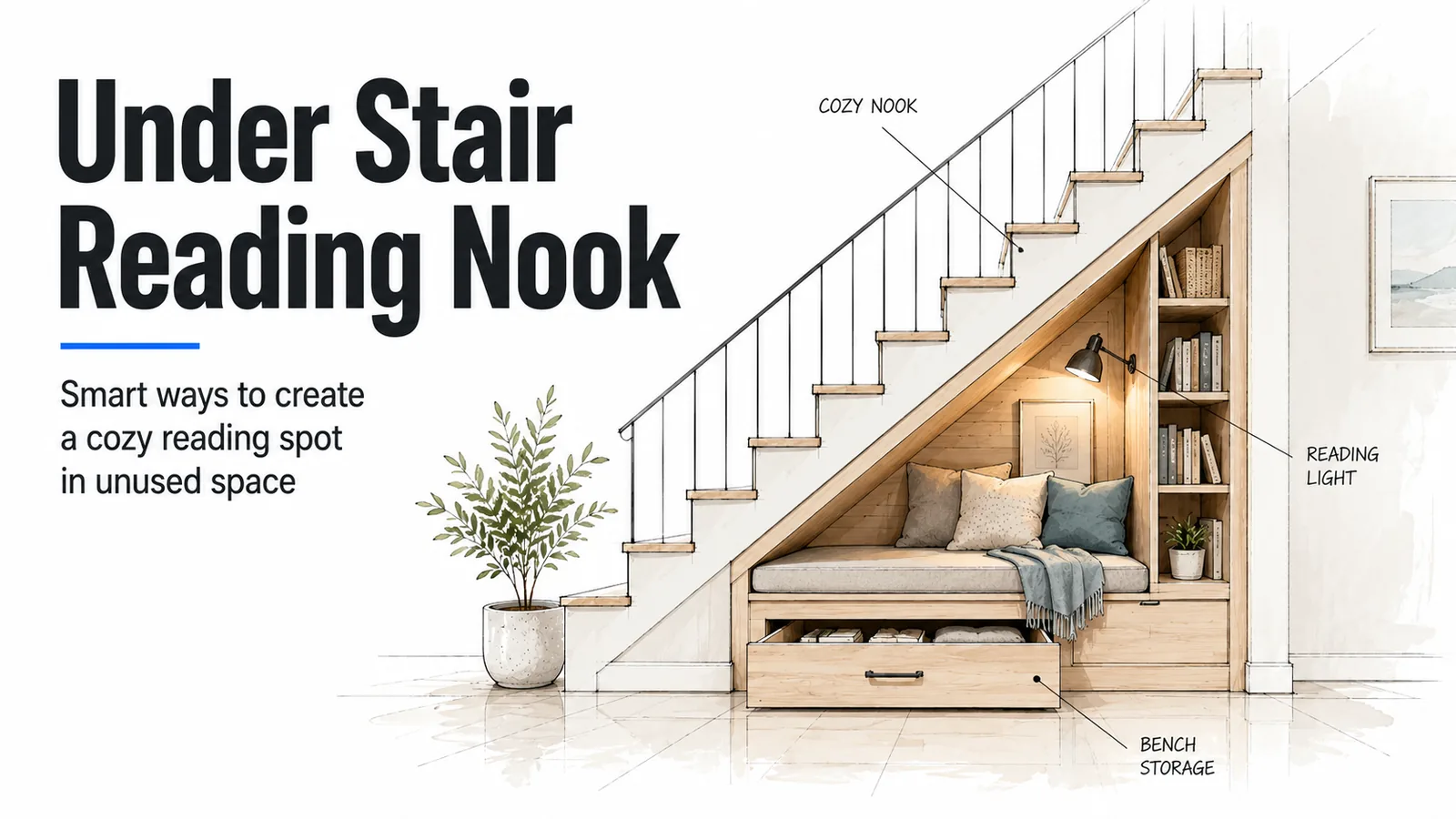
A reading nook is a softer and more emotional use of the under stair space.
It may not provide the maximum amount of storage, but it can give the home more character.
A simple reading nook can include a built-in bench, seat cushion, wall light, small bookshelf, hidden drawer below the seat, and warm wall finish.
This works especially well in family homes, compact apartments, and interiors where the staircase is part of the living space.
The low ceiling can actually make the nook feel cozy rather than awkward.
To make it useful, add a small light and keep the seat deep enough to feel comfortable. A drawer below the bench can also keep the nook practical.
The best reading nooks are simple. A comfortable seat, warm lighting, and a few books are usually enough.
10. Pet Space Under the Stairs
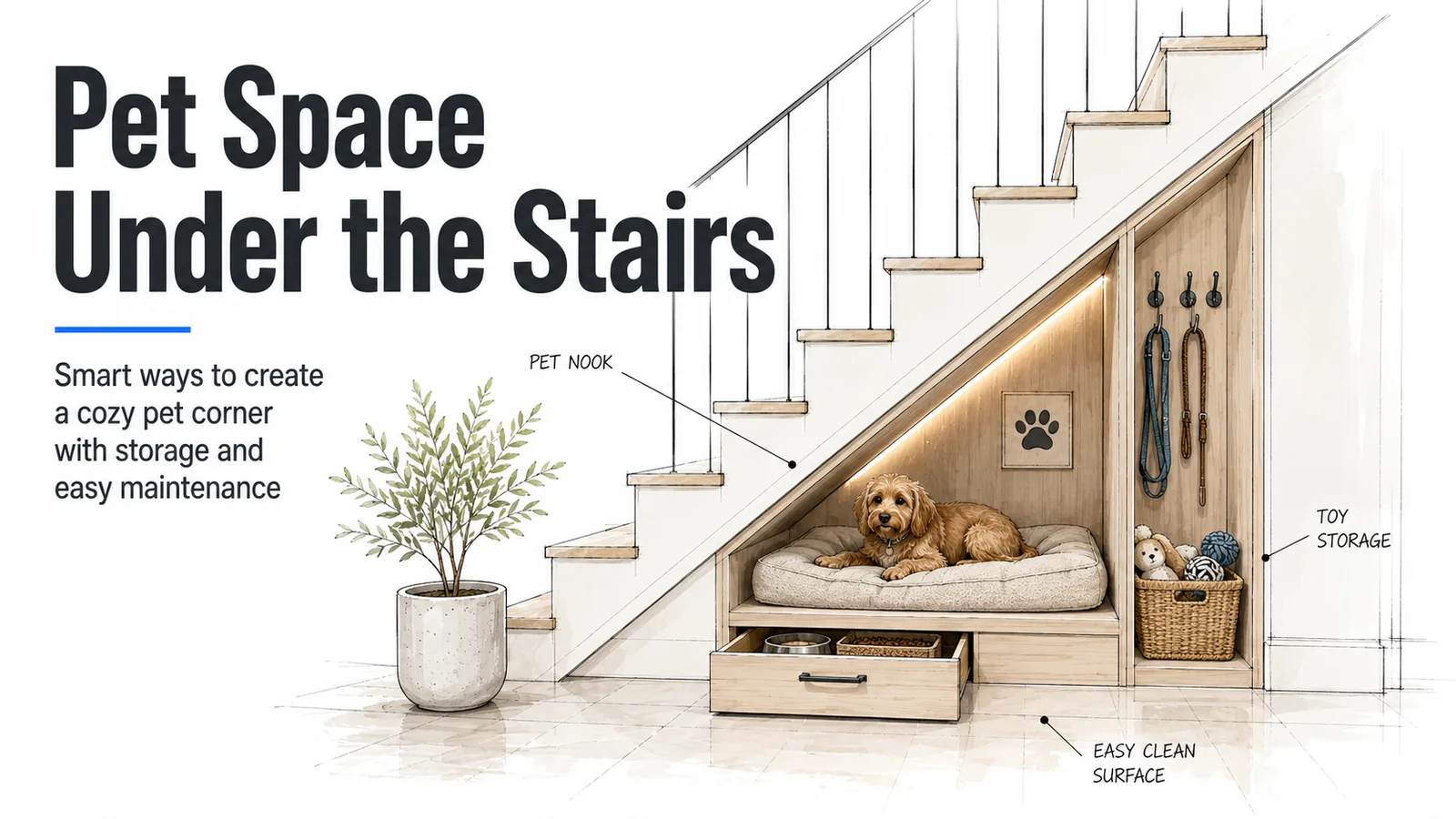
The lower part of the staircase can become a pet corner.
This is a smart use of the lowest zone because pets do not need full standing height.
The space can include a dog bed, cat corner, pet food drawer, toy storage, leash hooks, and a small washable floor area.
For pet storage, easy cleaning is important. Use durable finishes and avoid deep corners that collect dust and hair.
If the space is enclosed, make sure there is enough ventilation.
A pet zone should also be calm and simple. Avoid making the opening too small or too deep, because it will become difficult to clean and maintain.
For dogs, a low open nook usually works better than a fully closed cabinet. For cats, a more enclosed corner may feel comfortable, but it still needs easy access for cleaning.
11. Laundry or Utility Storage Under the Stairs
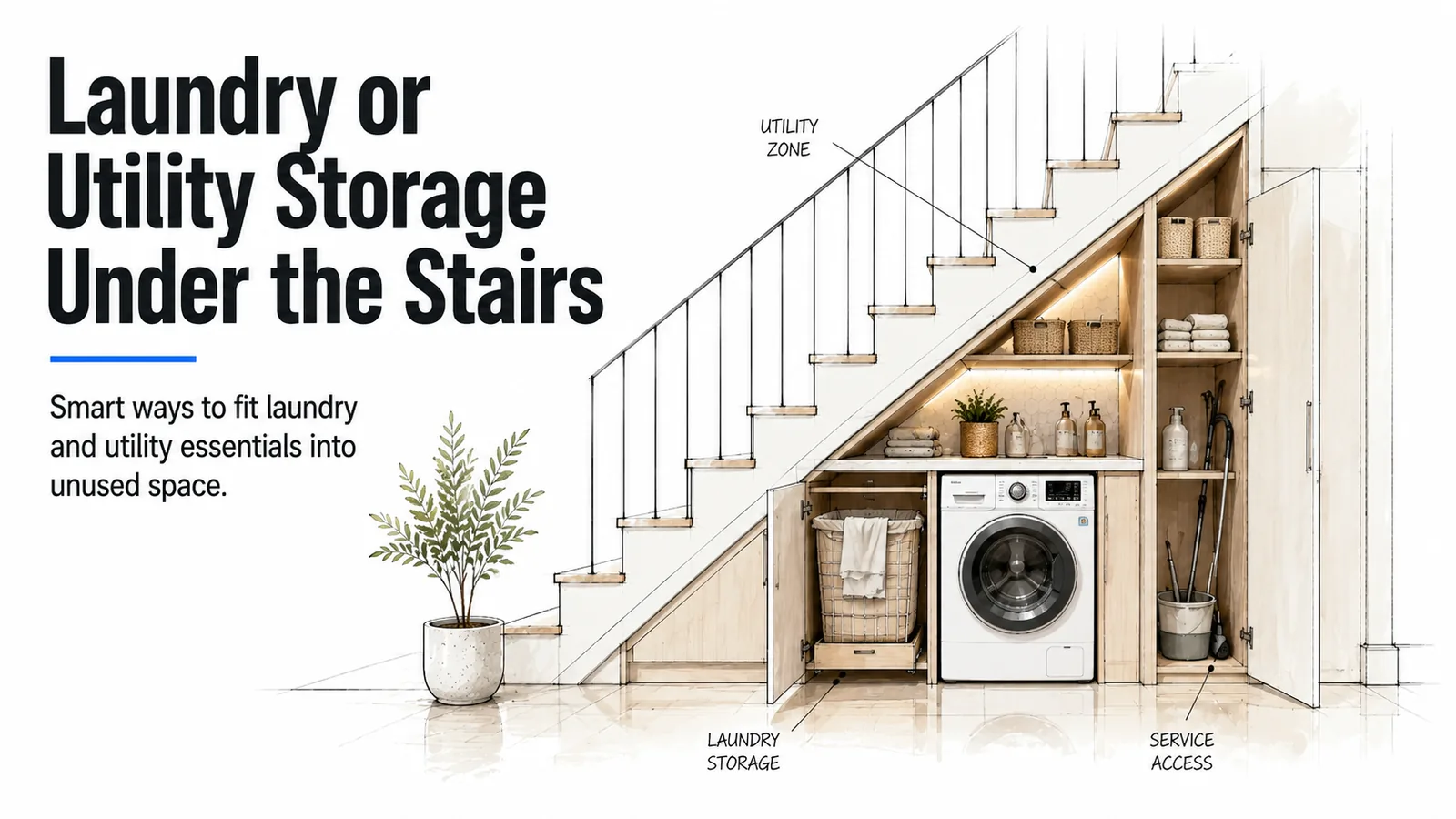
In some homes, the space under the stairs can work as a compact utility area.
This can include a washing machine, cleaning cabinet, laundry baskets, or household storage.
However, this idea needs more planning than normal storage. Appliances may require plumbing, drainage, ventilation, electrical work, and access for maintenance.
This type of under stair storage is best when the staircase is close to existing services.
Do not force a laundry function into the stair zone if it creates noise, heat, humidity, or maintenance problems.
Laundry and utility functions also raise more safety questions than simple storage. If you are adding appliances, electrical outlets, or service equipment under the stairs, check local building rules before building the enclosure.
Leave enough space to pull appliances out for repair. A beautiful built-in laundry nook can become a problem if maintenance access is ignored.
Important Design Rules for Under Stair Storage
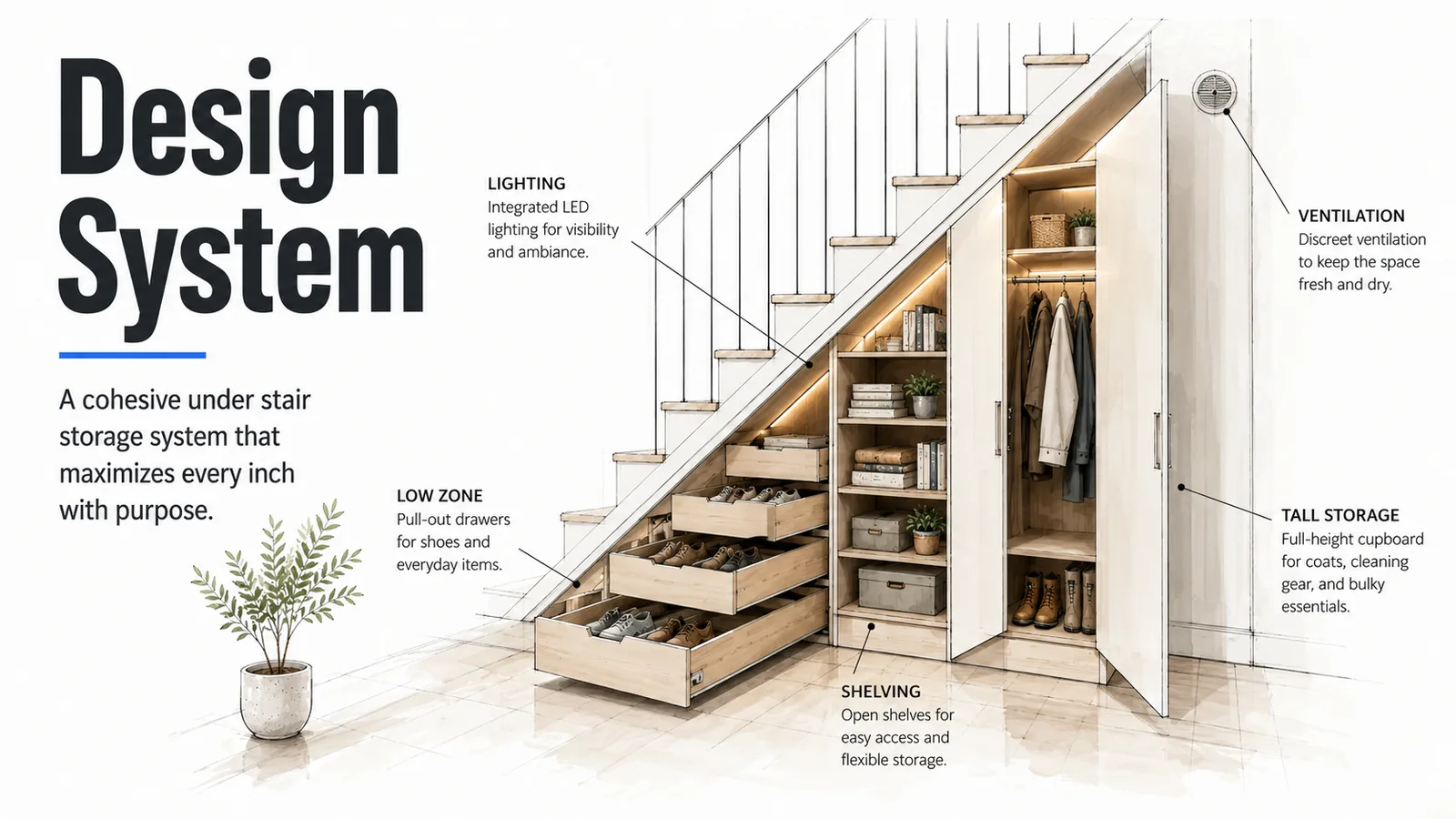
Before designing under stair storage, measure the space carefully.
You need to know the full width, full depth, highest point, lowest point, stair angle, wall thickness, door swing space, nearby circulation, existing structure, and any electrical or plumbing obstacles.
Under stair storage often fails because it is designed from inspiration photos instead of real measurements.
The space must be designed around the actual stair geometry.
In the UK, Approved Document K gives guidance on stairs, ramps, guarding, falling, collision, and impact. While it is not an under-stair storage manual, it is still relevant because storage should not compromise stair safety, circulation, or guarding. Reference: UK Government - Approved Document K
Use the Low Area Wisely
The lowest part under the stairs is not suitable for standing functions.
Do not force a desk, pantry, or coat closet into the lowest zone.
Use it for drawers, shoes, pet beds, baskets, seasonal storage, or low cabinets.
The taller side should be saved for functions that need height, such as coats, shelves, cleaning tools, or a small desk.
A simple zoning strategy works best:
- Low zone: drawers, shoes, pet storage, baskets
- Middle zone: shelves, pantry, display storage
- Tall zone: coats, cleaning tools, luggage, appliances, or desk use
This makes the storage feel intentional instead of random.
Avoid Deep Dead Storage
Deep storage looks useful, but it can become a problem if there is no easy access.
A deep cupboard under the stairs often becomes a dark place where forgotten items disappear.
To avoid this, use pull-out drawers, sliding trays, baskets, open shelves, vertical dividers, and internal lighting.
The deeper the space, the more important access becomes.
If a cabinet is more than arm’s reach, fixed shelves are usually not enough. A pull-out system is usually better.
Add Lighting
Under stair storage can become very dark, especially if it has doors.
Lighting makes the storage easier to use and also makes it feel more designed.
Good lighting options include LED strip lights, motion sensor lights, small recessed lights, wall lights for open niches, and task lights for desk areas.
A simple motion sensor light inside a cupboard can make a big difference.
Lighting is especially important for shoe storage, pantry shelves, deep drawers, and cleaning cupboards.
Think About Ventilation
Closed under stair storage can trap smells, humidity, and dust.
Ventilation is especially important if the space is used for shoes, coats, pantry items, laundry, cleaning supplies, or pet areas.
Ventilation can be added through door gaps, grilles, perforated panels, cane panels, or small openings.
The storage should not feel like a sealed box.
If the stair area is already dark and poorly ventilated, avoid storing damp coats, wet shoes, food, or appliances that produce heat or moisture.
Related guide: Cross Ventilation in Architecture: A Practical Design Guide
Check Safety and Building Rules
A staircase is not just furniture. In many homes, it is part of the circulation and escape route.
Before adding enclosed storage, electrical work, appliances, or combustible materials under the stairs, check the relevant local building rules.
This is especially important in multi-level homes, apartments, rental properties, and spaces connected to exits.
For simple drawers, shelves, or cupboards, the risk is lower. But for utility areas, electrical panels, laundry machines, or enclosed rooms, safety should be checked carefully.
The International Residential Code includes a specific under-stair protection rule for enclosed accessible spaces. Reference: ICC Digital Codes - IRC R302.7 Under-stair protection
For larger buildings or shared stairwells, storage near stairs can become more serious because stairs may be part of the means of egress. NFPA guidance explains that egress design is about how occupants move toward exits during emergencies. Reference: NFPA - Basics of Means of Egress Arrangement
Best Materials for Under Stair Storage
The best material depends on the style and budget.
Common options include painted MDF, plywood, solid wood, laminate, metal frames, cane panels, mesh panels, and painted wall panels.
For most homes, painted MDF or plywood gives a good balance between cost, appearance, and flexibility.
If you want a more sustainable look, reclaimed timber can also work well. This connects nicely with the idea of architectural salvage and reusing older building materials in new interiors.
Related guide: Architectural Salvage: How Old Building Materials Can Give New Life to Modern Design
Material choice should also respond to function:
- Shoes need durable and easy-to-clean surfaces
- Pantry storage needs clean, dry, wipeable shelves
- Laundry storage needs moisture-resistant finishes
- Pet zones need washable surfaces
- Display shelves need better detailing because they stay visible
- Hidden cupboards need strong hinges and clean alignment
The material should not only look good. It should survive daily use.
Best Under Stair Storage Ideas by Location
Entrance Hall
Use the under stair space for shoes, coats, bags, keys, and daily items.
This is one of the most practical options because the storage is close to the door.
Living Room
Use open shelves, books, display storage, a hidden media cabinet, or a reading nook.
This works well when the staircase is visible and can become part of the room design.
Kitchen Area
Use the space as a pantry, appliance cabinet, or cleaning storage.
Make sure it has ventilation and easy access.
Family Home
Use drawers, toy storage, school bag storage, pet space, or mixed open and closed storage.
Family storage should be easy to use and easy to clean.
Small Apartment
Use hidden cupboards, pull-out drawers, compact work nooks, or multi-purpose storage.
In small apartments, the goal is to reduce clutter without making the interior feel heavy.
Common Under Stair Storage Mistakes
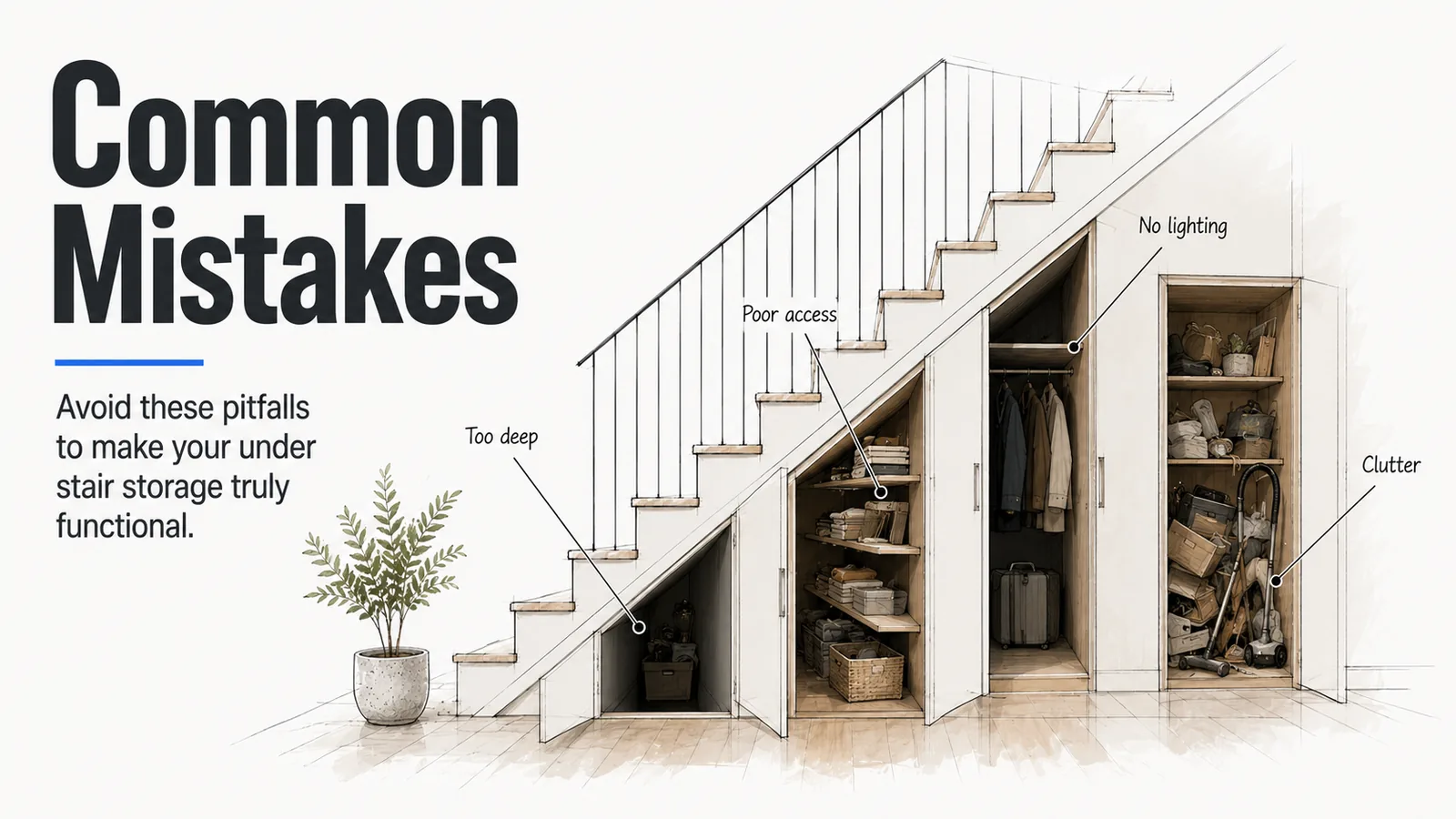
The most common mistake is making the storage too deep without pull-outs.
Other common mistakes include no internal lighting, no ventilation, poor drawer hardware, too many small compartments, bad door alignment, ignoring the stair structure, blocking circulation, forcing the wrong function into the space, using cheap materials in high-use areas, and forgetting maintenance access.
Good under stair storage should feel simple from the outside and smart on the inside.
The worst under stair storage is usually the one that looks useful in a photo but becomes annoying in daily life.
To avoid this, always ask:
- Can I reach the back?
- Can I clean it easily?
- Is it too dark?
- Does it smell or trap humidity?
- Does it block movement?
- Is the function right for this location?
- Is the joinery strong enough for daily use?
- Does it affect stair safety or escape routes?
If the answer is unclear, simplify the design.
Under Stair Storage Checklist
Before building under stair storage, use this simple checklist:
- Measure the stair space accurately
- Decide the main function before designing
- Keep the low zone for low storage
- Use the tall zone for vertical storage
- Avoid deep fixed shelves
- Add lighting
- Add ventilation
- Use durable materials
- Keep circulation clear
- Check stair safety and local rules
- Avoid overloading the design with too many functions
The best designs are usually simple, calm, and easy to maintain.
Final Thoughts
Under stair storage is a simple idea, but when it is designed well, it can completely change how a home works.
The space below a staircase does not need to remain empty or awkward. It can become a shoe cabinet, coat closet, pantry, bookshelf, hidden cupboard, office nook, pet corner, or deep drawer system.
The best solution depends on the stair location, the height of the space, the depth, the daily habits of the household, and the style of the interior.
A good under stair design does not just add storage. It makes the home feel calmer, cleaner, and more intentional.
References and Further Reading