
Mastering Scale and Proportion in Architecture
Dive deep into the concepts of scale and proportion in architecture, exploring their vital importance in creating harmonious designs.
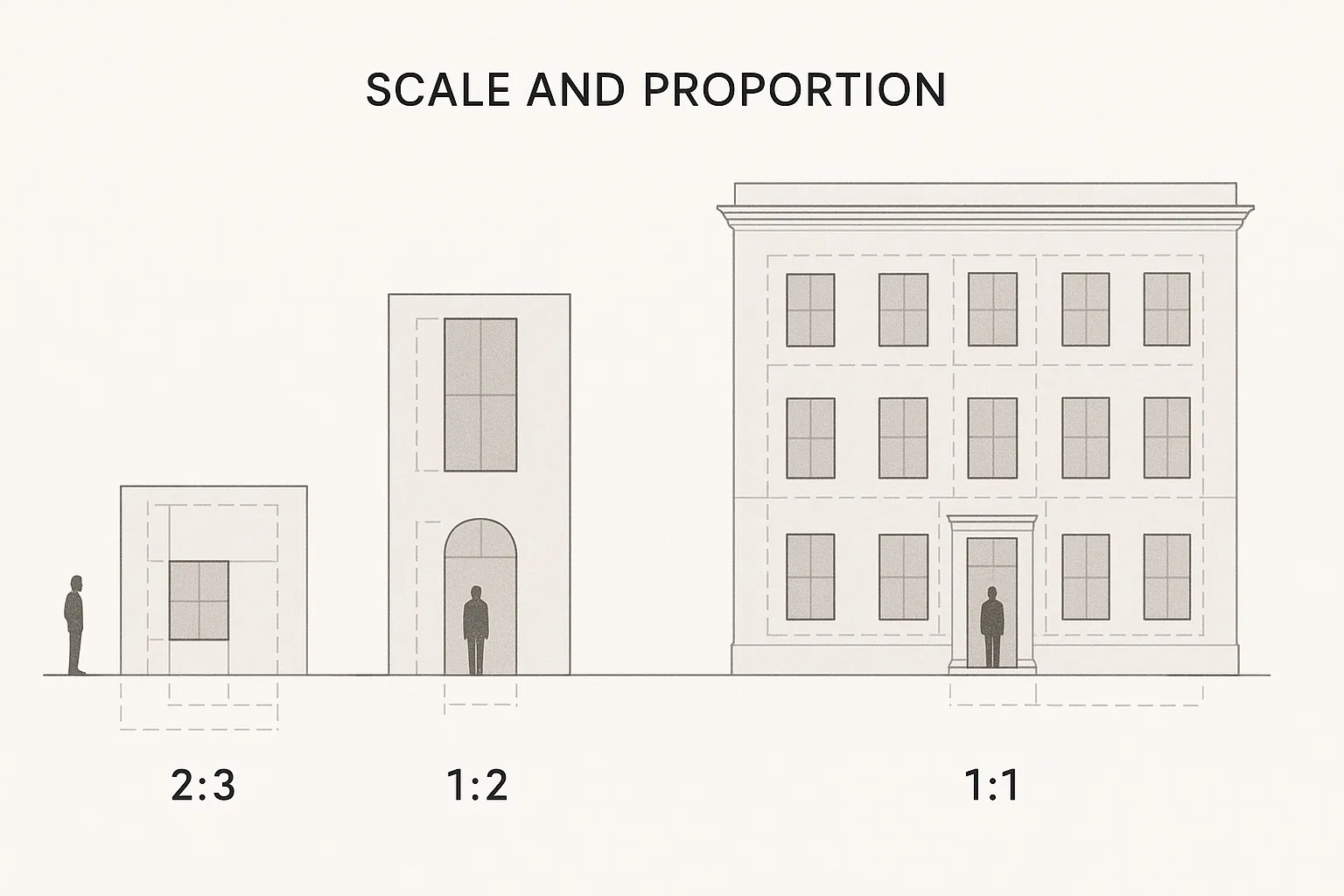
Understanding scale and proportion in architecture is fundamental to creating spaces that are not only aesthetically pleasing but also functional and harmonious. These concepts are the backbone of architectural design, influencing everything from the overall form and massing of a building to the intricate details of its facade and interior spaces. In this comprehensive guide, you will explore the nuances that differentiate scale from proportion and discover why these elements are pivotal in achieving visual balance and human comfort.
As you delve deeper, you will learn how architects use scale to relate a building to its environment and how proportion ensures that each element within a structure harmonizes with the whole. This guide will provide practical examples and rules of thumb, helping you to apply these principles effectively in your own projects. Whether you are a student just beginning your architectural journey or a seasoned professional seeking to refine your craft, this resource aims to demystify the complexities of scale and proportion. Through clear explanations and illustrative diagrams, you will gain a deeper understanding of how these principles can transform your designs, making them both visually appealing and contextually appropriate. Embark on this journey to master the art of scale and proportion, and elevate your architectural creations to new heights.
Introduction to Scale and Proportion
In architecture, scale and proportion are foundational concepts that significantly influence the aesthetics, functionality, and comfort of a building. Understanding these principles is crucial for creating spaces that not only look harmonious but also feel right to the human experience. Let's delve into these concepts to see how they can be applied effectively in architectural design.
Scale: The Relationship to Humans
Scale refers to the size of an object in relation to a standard or a familiar size, typically the human body. When architects talk about scale, they consider how a building or a space feels to a person standing in or near it. Human scale is a critical aspect, as it ensures that spaces are neither overwhelming nor underwhelming. For example, a door should be designed at a height that feels comfortable to the average person, usually around 6 feet 8 inches (2.03 meters) tall.
The choice of scale can dramatically influence the perception of a space. A large, open atrium can evoke a sense of grandeur and openness, while a small, cozy room can create a feeling of warmth and intimacy. Architects often use scale to manipulate how a space is perceived, guiding the emotional responses of its occupants.
Proportion: The Relationship Within Elements
Proportion is about the relationship between elements within a structure. It involves the ratio between different parts of a building, such as the height of a wall to its width, or the size of windows relative to the facade. Proportion is essential for achieving visual harmony and balance.
A common method for determining proportion is the use of mathematical ratios, such as the Golden Ratio (approximately 1:1.618), which has been used in architecture for centuries to create aesthetically pleasing compositions. When elements of a building are proportionate, they create a sense of order and unity, making the design more coherent and visually appealing.
Practical Application of Scale and Proportion
-
Facade Design: When designing a facade, consider the scale of windows and doors. Large windows can provide ample natural light and views but may require careful consideration of privacy and energy efficiency. The proportion of window-to-wall should be balanced to maintain aesthetic appeal and functionality.
-
Room Dimensions: The scale of a room should reflect its intended use. A living room, for example, should be large enough to accommodate furniture and allow for comfortable movement, typically around 12 to 18 feet (3.6 to 5.5 meters) in width. In contrast, a bedroom may be smaller but should still feel spacious enough for relaxation.
-
Furniture Placement: Furniture should be scaled appropriately to the room size. Oversized furniture can make a room feel cramped, while undersized pieces may leave it feeling sparse. Consider the proportion of furniture to floor space to ensure balance.
Common Mistakes and Considerations
-
Ignoring Human Scale: Designing spaces that are too large or too small can lead to discomfort. Always consider the end-user and how they will interact with the space.
-
Overlooking Proportion: Disproportionate elements can disrupt the visual harmony of a building. Use consistent ratios and alignments to maintain balance.
-
Neglecting Functionality: While aesthetics are important, functionality should not be compromised. Ensure that the scale and proportion support the practical use of the space.
For further insights into how scale can be mastered in architecture, refer to our guide on mastering scale in architecture. Additionally, explore the comprehensive guide to passive house design to understand how scale and proportion contribute to energy efficiency and sustainability.
By mastering the principles of scale and proportion, architects can create spaces that are not only beautiful but also comfortable and functional, enhancing the overall experience for the occupants.
Differences between Scale and Proportion
Understanding the nuances between scale and proportion is critical in architecture, as these principles directly influence the aesthetics and functionality of a design. While often used interchangeably, scale and proportion have distinct meanings and applications.
Scale refers to the size of an object in relation to a standard or familiar size. In architecture, this often means comparing the size of a building or its elements to the human body, or to other buildings in the vicinity. For example, a door designed at a human scale will be large enough to allow a person to pass through comfortably, while a skyscraper is often considered at an urban scale, where it relates to the skyline and surrounding structures.
Proportion, on the other hand, is about the relationship between elements within a structure. It focuses on the ratio of dimensions rather than their absolute size. Proportion helps in creating harmony and balance within a space. For example, the proportion of a window to a wall can affect how light is perceived and how the room feels in terms of openness or enclosure.

Practical Considerations for Scale
-
Human Scale: Always consider how a space or element will be used by people. A room with a ceiling too high can feel overwhelming, while one too low can be claustrophobic. The standard ceiling height, around 2.4 meters (8 feet), is often used because it comfortably accommodates human scale.
-
Contextual Scale: When designing a building, consider its context. A new structure should relate harmoniously to its surroundings. For instance, a modern glass facade might seem out of place in a historic neighborhood unless carefully scaled and detailed.
-
Functional Scale: The scale should also reflect the function of the space. Public buildings like libraries or museums often use larger scales to convey importance and accommodate larger groups of people.
Practical Considerations for Proportion
-
Golden Ratio: This is a time-tested principle where the ratio of 1:1.618 is used to create aesthetically pleasing designs. Many architects use this ratio to determine window sizes, room dimensions, and even furniture layout.
-
Modular Proportioning: Using a grid or module can ensure that all elements of a design relate to each other. This is particularly useful in complex projects where consistency and harmony are critical.
-
Visual Weight: Proportion can affect how the visual weight of a space is perceived. A large, heavy-looking element can be balanced by a group of smaller elements, creating an equilibrium that feels stable and pleasing.
Common Mistakes
-
Ignoring Context: Failing to consider the scale of surrounding buildings can result in a design that feels out of place.
-
Overemphasizing One Element: Focusing too heavily on one aspect of scale or proportion can lead to imbalances. For example, a disproportionately large entryway can dwarf surrounding elements, disrupting the overall harmony.
-
Neglecting Human Experience: Designs that look good on paper may fail in reality if they do not consider human interaction. Always prototype or simulate human use during the design phase.
To explore more about how scale specifically impacts architectural design, consider reading our mastering scale in architecture guide.
The Importance of Scale in Design
In architecture, scale is a fundamental design principle that profoundly influences how we perceive and interact with spaces. It refers to the size of an object in relation to a standard or familiar size, often the human body. Understanding and applying scale effectively can enhance both the functionality and aesthetic appeal of architectural projects.
Human Scale and Comfort
The concept of human scale is pivotal in ensuring that buildings and spaces are comfortable and accessible. Human scale refers to the proportions of a building or space relative to the human body. When designing, architects must consider dimensions such as ceiling height, door width, and furniture size to ensure that spaces are not only functional but also inviting. For example, standard door heights are typically 80 inches (about 203 cm) to accommodate the average human height comfortably.

Scale in Urban Context
Scale also plays a crucial role in how buildings relate to their urban environment. In dense urban areas, buildings that are too large or small in scale can disrupt the visual harmony and functionality of the streetscape. For instance, a skyscraper surrounded by low-rise buildings can appear imposing and out of place, affecting the overall aesthetic and potentially the microclimate of the area.

Proportion and Visual Harmony
While scale addresses the size of elements, proportion focuses on the relationship between them. Proportion is essential for achieving visual harmony in design. The golden ratio, approximately 1.618:1, is a well-known proportional guideline that has been used since antiquity to create aesthetically pleasing compositions. When architects apply these principles, they can create spaces that feel balanced and harmonious.
Practical Considerations
When designing with scale, architects must balance various factors such as functionality, aesthetics, and context. Here are some practical considerations:
-
Functionality: Ensure that the scale of elements like staircases, hallways, and furniture allows for ease of use and movement. For example, stair risers should ideally be between 6 to 7.5 inches (15 to 19 cm) to accommodate comfortable walking.
-
Aesthetics: Use scale to create impactful visual statements. For example, a large atrium can provide a sense of grandeur and openness, while smaller, intimate spaces can evoke coziness.
-
Contextual Integration: Consider the surrounding environment and cultural context. A building that respects the scale of its neighbors will likely be more accepted by the community and contribute positively to the urban fabric.
Common Mistakes
One common mistake is ignoring the human scale, which can lead to spaces that feel oppressive or awkward. Another is failing to consider the building's context, resulting in designs that clash with their surroundings. To avoid these pitfalls, architects should conduct thorough site analyses and engage in community consultations to understand the local scale dynamics.
For more insights on integrating scale with sustainable practices, you might explore our mastering scale in architecture guide.
In conclusion, mastering scale in design is about creating spaces that are not only functional and aesthetically pleasing but also contextually appropriate and human-centric. By thoughtfully considering scale, architects can enhance the quality of life for the occupants and contribute positively to the built environment.
Proportion and Visual Harmony
Proportion is a fundamental concept in architecture that plays a critical role in achieving visual harmony within a structure. It involves the relationship between the dimensions of different elements within a building, ensuring that each part relates harmoniously to the others and to the whole. An understanding of proportion can transform a building from a mere functional structure into a work of art that is pleasing to the eye and comfortable for its users.
One of the most well-known principles of proportion in architecture is the Golden Ratio, approximately 1:1.618. This ratio has been used since ancient times to create aesthetically pleasing compositions. For instance, the Parthenon in Athens is famous for its application of the Golden Ratio in its facade. Modern architects can apply this principle by ensuring that the height, width, and depth of a building or its components adhere to this ratio, creating a visually balanced design.
Another important aspect of proportion is the scale of elements relative to human dimensions. Architectural elements should be designed to accommodate human scale, ensuring comfort and usability. For example, doorways are typically around 80 inches in height, while countertops are usually 36 inches high. These dimensions are derived from average human measurements and contribute to a building's functionality and visual harmony.
When designing a facade, architects often use proportion to create rhythm and balance. This can be achieved by repeating elements such as windows or columns at regular intervals. The spacing and size of these elements should be proportionate to the overall dimensions of the facade, contributing to a cohesive and harmonious appearance.

In interior spaces, proportion affects how comfortable and inviting a room feels. A common mistake is creating spaces that are either too large or too small in relation to their intended use. A living room, for instance, should have proportions that allow for comfortable seating arrangements without feeling cramped or overly expansive. Using furniture that is appropriately scaled to the room's dimensions can help achieve this balance.
Proportion also plays a vital role in the massing of a building. Massing refers to the arrangement and form of the building volumes. A well-proportioned massing scheme will ensure that the building's different parts relate well to each other and to the surrounding environment. This is particularly important in urban settings, where buildings need to fit into the existing streetscape harmoniously.
When considering proportion, architects must also be mindful of the trade-offs between aesthetic appeal and practical functionality. For example, while a grand entrance might be visually impressive, it must also be functional and accessible. Similarly, large windows can enhance a building's appearance and provide ample natural light, but they must be proportionately sized to ensure energy efficiency and structural integrity.
Finally, proportion should not be considered in isolation but rather as part of a holistic design approach. It should work in tandem with other design principles such as scale, symmetry, and rhythm to create a cohesive and harmonious architectural composition. For further exploration of how scale integrates with proportion, you can refer to our mastering scale in architecture guide.
In conclusion, mastering proportion in architecture is essential for creating buildings that are not only functional but also aesthetically pleasing. By carefully considering the relationships between different elements and their dimensions, architects can achieve visual harmony that enhances both the building and its environment. For more on how these principles can be applied in sustainable design, check out this comprehensive guide to passive house design principles.
Practical Guidelines and Rules of Thumb
Understanding and applying the principles of scale and proportion in architecture can significantly enhance the functionality and aesthetic appeal of a building. Here are some practical guidelines and rules of thumb to help you effectively incorporate these principles into your designs.
- Human Scale and Proportion
-
Consider the Human Experience: Always start by considering the human scale, which refers to the relationship between the dimensions of a building and the human body. This ensures spaces are comfortable and accessible. For instance, door heights should be around 80 inches, and standard ceiling heights are typically 8 to 9 feet.
-
Furniture Layout: Arrange furniture in a way that complements the room's scale. A large sofa in a small living room can overwhelm the space, while a petite chair might get lost in a large hall. Use a consistent scale for furnishings to maintain balance.

- Proportional Systems
-
The Golden Ratio: This ancient mathematical ratio (approximately 1:1.618) is often used in design for its visually pleasing properties. Apply it to the layout of facades, room dimensions, or even window placements to achieve harmony.
-
Modular Grids: Use modular grids to maintain consistent proportions throughout your design. This can be particularly useful in complex projects like container house design, where modularity is essential.
- Facade and Massing
-
Balance and Symmetry: Ensure that the building’s facade is balanced. Symmetry can create a sense of order and calm, while asymmetry can add interest and dynamism. However, asymmetry should still follow a proportional logic to avoid visual chaos.
-
Massing Considerations: Break down large volumes into smaller, more manageable masses that relate to human scale. This can be achieved through the use of setbacks, varied rooflines, and changes in materials or colors.
- Interior Spaces
-
Room Proportions: Aim for room dimensions that are not only functional but also aesthetically pleasing. A common rule is to avoid rooms that are either too long or too narrow, as they can feel claustrophobic or awkward. A ratio close to 1:1.5 is often ideal.
-
Ceiling Heights: Varying ceiling heights can help define different zones within an open-plan space. Higher ceilings can make a space feel more expansive, while lower ceilings can create a cozy atmosphere.
- Avoiding Common Mistakes
-
Over-Scaling: Avoid making elements too large in an attempt to create grandeur. This can lead to spaces that feel impersonal and intimidating.
-
Ignoring Context: Consider the surrounding environment and existing structures. A building that is out of scale with its surroundings can disrupt the visual harmony of the area.
- Iterative Design Process
-
Prototype and Test: Use models and mock-ups to test scale and proportion before finalizing designs. This iterative process allows for adjustments and ensures that the end result meets both functional and aesthetic goals.
-
Feedback and Refinement: Gather feedback from peers or clients to refine your design. This can provide new perspectives and highlight areas for improvement.
By adhering to these guidelines and continuously refining your approach, you can master the art of scale and proportion in architecture, creating spaces that are not only functional but also visually harmonious. For further insights, explore our mastering scale in architecture guide, which delves deeper into these concepts.
Case Studies and Real-World Examples
Understanding scale and proportion in architecture is best achieved through examining real-world examples where these principles are effectively applied. By analyzing various architectural projects, we can discern how scale and proportion contribute to the functionality, visual comfort, and overall harmony of a building.
The Parthenon, Athens
One of the most iconic examples of scale and proportion is the Parthenon in Athens. This ancient temple is renowned for its use of the Golden Ratio, a mathematical ratio often found in nature, which has been used to achieve aesthetic harmony. The Parthenon's columns are spaced and proportioned to create a sense of balance and order. Architects and students alike can learn from how the Parthenon's dimensions contribute to its enduring appeal and structural integrity.

Fallingwater by Frank Lloyd Wright
Frank Lloyd Wright's Fallingwater is a quintessential example of how scale and proportion can be used to integrate a building with its natural surroundings. Wright designed the house to appear as if it is part of the waterfall over which it is built. The horizontal lines of the building mimic the natural rock formations, while the vertical elements reflect the surrounding trees. This thoughtful consideration of scale ensures that the house does not overpower its environment but instead complements it, demonstrating a seamless blend of architecture and nature.
The Guggenheim Museum, New York
Designed by Frank Gehry, the Guggenheim Museum in New York offers a modern take on scale and proportion. The museum's spiraling design allows for a continuous flow of movement, guiding visitors through the space in a way that feels intuitive and natural. The scale of the building's interior is vast, yet the proportions are carefully calculated to maintain a sense of intimacy and engagement with the art on display. This example highlights how modern architecture can use scale to enhance user experience and interaction.
The Shard, London
The Shard in London, designed by Renzo Piano, is an example of how scale can be used to make a statement in an urban environment. Standing at 310 meters, it is the tallest building in the UK. The Shard's design tapers as it rises, which not only gives it a striking silhouette but also ensures that it does not dominate the skyline aggressively. The proportions of the glass panels create a dynamic play of light, making the building appear to change with the weather and time of day. This clever use of scale and proportion ensures that the building is both a landmark and a harmonious part of the city's architectural fabric.
Common Mistakes in Applying Scale and Proportion
When applying scale and proportion, common mistakes include neglecting the context of the surrounding environment and failing to consider human scale. Buildings that do not account for their surroundings can appear out of place or oppressive. Additionally, if the human scale is ignored, spaces can feel uncomfortable or disorienting. Architects should always consider these elements to ensure their designs are both functional and visually pleasing.
For further insights into effective architectural design, you might explore mastering scale in architecture, which provides a deeper understanding of these crucial principles.
Conclusion and FAQs
Understanding scale and proportion in architecture is fundamental to creating spaces that are not only functional but also visually harmonious. Throughout this guide, we've delved into the nuances of these design principles, exploring how they influence architectural form, facade, and the overall experience of a space. Let's recap some key points and address common questions that may arise.
Recap of Key Points
-
Difference Between Scale and Proportion: Scale refers to the size of an object in relation to another object or to a system of measurement. Proportion, on the other hand, is about the relationship between the parts of an object or between different objects.
-
Importance in Design: Proper use of scale and proportion ensures that buildings are not only aesthetically pleasing but also functional and comfortable for human use. They contribute to architectural harmony and can significantly affect the perception of space.
-
Practical Application: Architects use these principles to ensure that the various elements of a building work together cohesively. This includes everything from the size of a window to the height of a ceiling, each contributing to the overall visual comfort and functionality of the space.
-
Common Mistakes: A frequent error is ignoring the human scale, which can lead to spaces that feel oppressive or unwelcoming. Another is misjudging the proportion of architectural elements, resulting in visual dissonance.
FAQs
1. How do scale and proportion affect human comfort?
Scale and proportion are crucial in designing spaces that feel right to the human experience. For instance, a room with a ceiling that's too high or too low can feel either overwhelming or claustrophobic. Proper scaling ensures that spaces are comfortable, accessible, and visually appealing.
2. Can you provide an example of scale in architecture?
An example of scale in architecture is the use of large windows in a tall building. These windows are scaled to the building's height, providing adequate light and views while maintaining the building's aesthetic proportions.
3. What are some tools architects use to achieve proper scale and proportion?
Architects often use tools like the Golden Ratio or the Fibonacci sequence to guide the proportion of elements within a design. These mathematical tools help in creating visually appealing and harmonious designs.
4. How can I learn more about implementing these principles in design?
A great starting point is to explore resources like the mastering scale in architecture guide. It offers detailed insights and practical examples to deepen your understanding.
5. Are there modern examples of architecture that exemplify these principles?
Yes, modern architecture often showcases excellent use of scale and proportion. For example, minimalist designs emphasize simplicity and proportion, creating spaces that are both functional and aesthetically pleasing. To explore more about this, you might find the the ultimate guide to minimalist house helpful.
In conclusion, mastering scale and proportion in architecture is not just about aesthetics but about creating spaces that enhance human experience. By understanding and applying these principles, architects can design buildings that are both beautiful and functional, ensuring that every element contributes to the overall harmony of the design.

Incorporating these principles thoughtfully will lead to designs that stand the test of time, offering both utility and beauty in equal measure. For further reading, you can explore resources like https://www.archdaily.com for contemporary examples and expert discussions on architectural design principles.
Frequently Asked Questions
What is the difference between scale and proportion in architecture?
Scale refers to the size of an object in relation to another object or a system of measurement, such as the human body. Proportion, on the other hand, is the relationship between the dimensions of different elements within a design. Both are crucial for creating spaces that feel balanced and harmonious.
Why are scale and proportion important in architectural design?
Scale and proportion are vital because they directly impact how a space feels and functions. Correctly scaled and proportioned spaces can enhance human comfort, improve functionality, and contribute to the aesthetic appeal of a building, ensuring it fits well within its environment.
How do scale and proportion affect human comfort in buildings?
Spaces that are well-scaled and proportioned are more likely to be comfortable for occupants. For example, rooms with ceilings that are too high or too low can feel oppressive or cavernous, respectively. Proper scale and proportion ensure that spaces are inviting and conducive to their intended use.
Can you provide an example of a rule of thumb for scale and proportion?
A common rule of thumb is the "Golden Ratio," which has been used for centuries to create visually pleasing proportions. It suggests that the ratio of 1:1.618 is aesthetically pleasing and can be applied to various elements in architecture, from window placement to room dimensions.
How do architects use scale and proportion in facade design?
Architects use scale and proportion to ensure that a building's facade is visually appealing and fits well within its context. This might involve aligning windows and doors with the building's overall proportions or ensuring that decorative elements are appropriately sized relative to the rest of the structure.
What are some practical examples of scale and proportion in architecture?
One practical example is the use of human scale in public spaces, where elements like benches, steps, and handrails are designed to be comfortable for human use. Another example is the careful proportioning of skyscrapers to ensure they are not only structurally sound but also visually harmonious with the skyline.
References and Further Reading
-
[International Code Council
-
International Building Code (IBC)](https://codes.iccsafe.org/content/IBC2021P1)
-
[ISO
-
ISO 21542:2021, Building construction — Accessibility and usability of the built environment](https://www.iso.org/standard/78309.html)
-
[American Institute of Architects
-
The Architect's Handbook of Professional Practice](https://www.aia.org/resources/6316-the-architects-handbook-of-professional-practice)
-
[National Institute of Building Sciences
-
Whole Building Design Guide](https://www.wbdg.org)
-
[ArchStacks
-
Mastering Scale in Architecture](https://archstacks.com/guides/scale-in-architecture)
-
[U.S. General Services Administration
-
Facilities Standards for the Public Buildings Service](https://www.gsa.gov/real-estate/design-construction/engineering-and-architecture/facilities-standards-p100-overview)
-
[Royal Institute of British Architects
-
RIBA Plan of Work](https://www.architecture.com/knowledge-and-resources/resources-landing-page/riba-plan-of-work)