
Mastering Scale in Architecture
Discover how scale shapes architectural design, influencing everything from personal experiences to grand monuments.
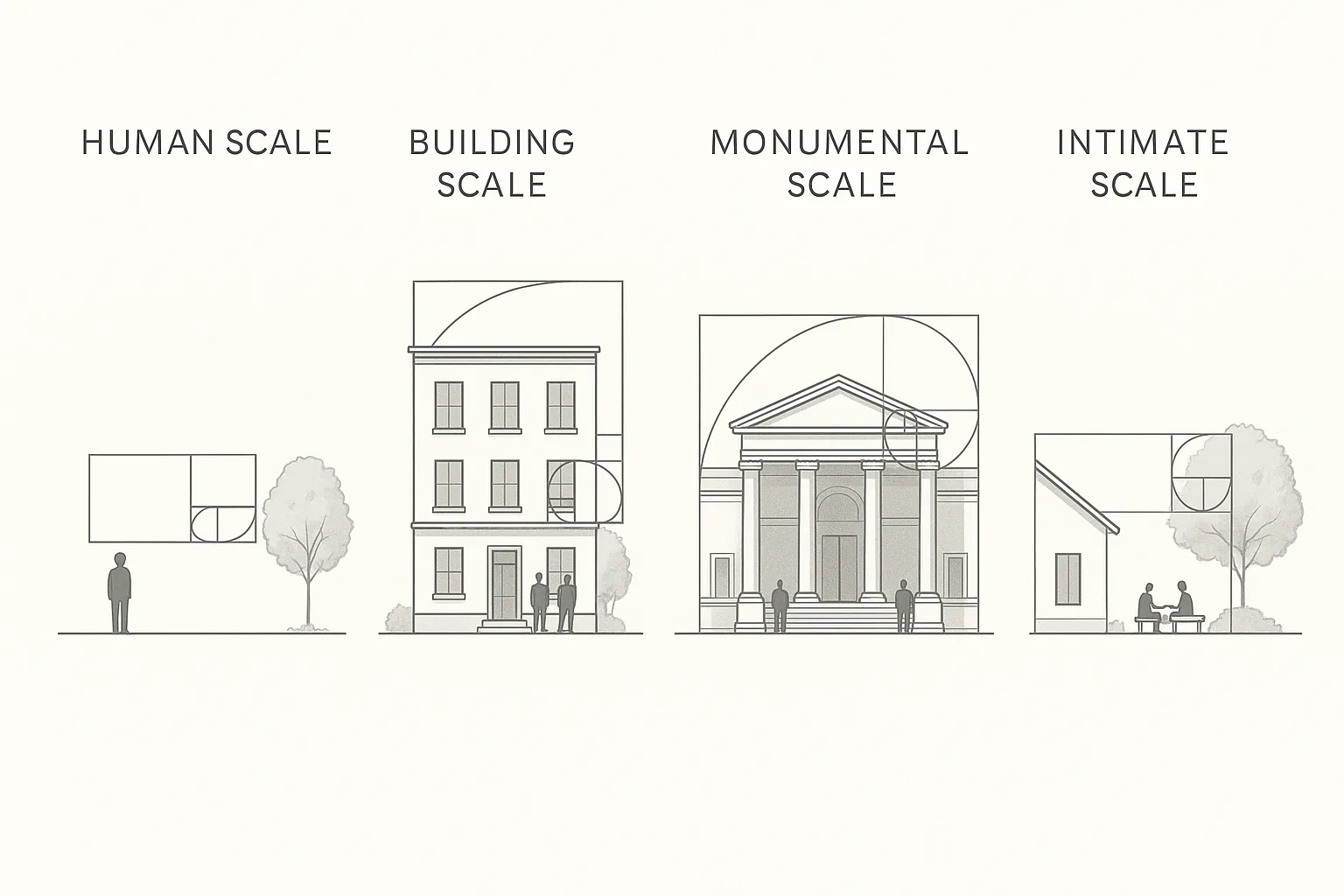
Scale in architecture is a fundamental concept that shapes the way we perceive and interact with spaces, influencing everything from the grandeur of monumental structures to the intimacy of personal dwellings. Understanding scale is essential for architects and designers as it affects the functionality, aesthetics, and emotional impact of a building. This guide, 'Mastering Scale in Architecture', delves into the intricacies of scale, offering insights into its various forms, such as human scale, building scale, and monumental scale, and how these can be skillfully manipulated to create compelling architectural experiences.
Readers will gain a comprehensive understanding of how scale is utilized in architectural design to enhance spatial experiences and convey meaning. The guide will explore practical examples of scale in architecture, highlighting both successful applications and common design pitfalls. By examining different types of scale, including visual and intimate scale, architects and enthusiasts alike will learn how to effectively apply these principles to their own projects. Whether you're looking to create a sense of awe with a towering skyscraper or foster coziness in a small home, understanding and mastering scale is key to achieving your design goals. This guide promises to equip you with the knowledge and tools necessary to harness the power of scale, ensuring your architectural endeavors are both innovative and impactful.
Introduction to Scale in Architecture
Scale is a fundamental concept in architecture that influences how we perceive and interact with spaces and structures. It is the relative size of architectural elements in comparison to human dimensions, other structures, and the environment. Understanding and applying scale appropriately can enhance the functionality and aesthetic appeal of a building, making it crucial for architects to master.
The Concept of Scale
In architecture, scale is not just about the physical size of a building or element but also how it relates to its surroundings and the human experience. There are several types of scale that architects consider:
-
Human Scale: This refers to the size of a building or space in relation to the human body. It is crucial for creating comfortable and accessible environments. For example, door handles, steps, and furniture are designed considering average human dimensions. A door typically measures about 80 inches in height and 36 inches in width to accommodate the average person comfortably.
-
Building Scale: This considers the size of a building relative to other buildings or structures. It is essential for maintaining harmony in urban environments. A skyscraper in a city with predominantly low-rise buildings could disrupt the skyline unless carefully integrated.
-
Monumental Scale: Used for buildings intended to convey power or importance, such as government buildings or cathedrals. These structures often feature grandiose elements like towering columns or expansive facades to evoke awe.
-
Intimate Scale: Applied to spaces designed to feel personal and cozy, such as a small reading nook or a private garden. This scale often involves smaller, human-sized elements that create a sense of enclosure and comfort.
-
Visual Scale: This deals with how a building or space is perceived visually, which can be manipulated through design elements like color, texture, and proportion.

Practical Applications of Scale
In practice, architects use scale to solve design problems and enhance user experience. Here are some considerations:
-
Proportion and Balance: Achieving the right proportions in a building involves understanding the relationship between different elements. For instance, the height of a ceiling can significantly affect the perception of space. A low ceiling may make a room feel cramped, while a high ceiling can create an airy, open feel.
-
Contextual Integration: When designing a building, architects must consider its context. A new structure in a historic district should respect the scale of existing buildings to maintain visual harmony. This might involve using similar materials or aligning rooflines.
-
User Experience: Scale impacts how people use and feel in a space. In the ultimate guide to minimalist house, the focus on essential elements often requires careful attention to scale to avoid overwhelming the simplicity with oversized furniture or fixtures.
Common Mistakes and Trade-offs
-
Ignoring Human Scale: A common mistake is designing spaces that ignore human scale, leading to discomfort. For example, excessively high countertops can be inconvenient for average users.
-
Disproportionate Elements: Large, disproportionate elements can dominate a space, making it unwelcoming. Architects must balance elements like windows, doors, and furniture to create cohesive designs.
-
Overlooking Environmental Context: Failing to consider the environmental context can lead to buildings that clash with their surroundings. This is particularly important in areas with strict zoning laws or aesthetic guidelines.
Understanding scale in architecture is not just about measurement but about creating spaces that resonate with human experience and environmental context. By mastering scale, architects can design buildings that are both functional and beautiful, enhancing the quality of life for their occupants.
Human Scale
Human scale in architecture refers to the design of spaces and structures that are proportionate to the human body, ensuring comfort and accessibility. This concept is fundamental in creating environments where people feel at ease and can interact naturally with their surroundings. The application of human scale affects everything from the height of doorways to the width of pathways, and it plays a crucial role in the overall user experience of a building.
Key Considerations for Human Scale
-
Proportion and Dimension: One of the primary considerations in human scale is ensuring that the dimensions of spaces and objects are in harmony with human measurements. For instance, standard door heights are typically around 6 feet 8 inches (2.03 meters), which accommodates the average height of adults comfortably. Similarly, countertops are often designed to be about 36 inches (91.4 cm) high to suit the average standing reach.
-
Furniture and Fixtures: The scale of furniture and fixtures within a space can significantly impact its usability and comfort. Chairs, tables, and other furnishings should be designed to fit the human body comfortably, with appropriate seat heights and depths. For example, a standard chair seat height ranges from 16 to 18 inches (40.6 to 45.7 cm), which allows most people to sit with their feet flat on the floor.
-
Spatial Layout: The layout of a space should facilitate natural movement and interaction. Hallways and pathways need to be wide enough to accommodate people walking side by side, typically at least 36 inches (91.4 cm) wide, although 48 inches (121.9 cm) is preferable in high-traffic areas.
-
Visual Comfort: Human scale also involves visual perception. Spaces that are too large or too small can feel overwhelming or claustrophobic. Architects often use elements like windows, lighting, and color to adjust the perceived scale of a space, making it feel more inviting and comfortable.
-
Accessibility: Ensuring accessibility is a critical aspect of human scale. This includes designing for people with disabilities, incorporating features like ramps, elevators, and handrails. The Americans with Disabilities Act (ADA) provides guidelines that help ensure spaces are accessible to all individuals, which often includes specifications on door widths and ramp slopes.
Examples of Human Scale in Practice
-
Residential Design: In homes, human scale is evident in the way rooms are sized and furnished. Bedrooms, for instance, are designed to provide enough space for a bed, nightstands, and pathways, typically allowing at least 30 inches (76.2 cm) of clearance around the bed for easy movement.

-
Public Spaces: Parks and plazas often use benches, pathways, and lighting designed to human scale, encouraging people to linger and interact. Benches are usually around 18 inches (45.7 cm) high, with a backrest height of about 30 inches (76.2 cm), providing comfortable seating.
-
Commercial Buildings: In offices and retail environments, human scale is reflected in the arrangement of workstations, checkout counters, and aisles. These areas are designed to accommodate both employees and customers, ensuring ease of use and comfort.
Common Mistakes in Human Scale Design
-
Ignoring User Experience: A common mistake is focusing solely on aesthetics without considering how people will use the space. This can lead to beautiful but impractical designs that do not accommodate the needs of users.
-
Overlooking Diversity: Not accounting for the diverse range of human sizes and abilities can result in spaces that are uncomfortable or inaccessible for many people. Incorporating universal design principles can help mitigate this issue.
-
Neglecting Context: Failing to consider the surrounding environment and cultural context can lead to designs that feel out of place or alienating. It's important to integrate human scale with the local context to create harmonious and welcoming spaces.
To delve deeper into creating spaces that resonate with human scale, consider exploring the essential guide to simple house for insights into designing environments that prioritize human comfort and functionality.
Building Scale and Monumental Scale
In architecture, scale is a critical element that influences how a building is perceived and experienced by its users. Building scale and monumental scale are two distinct approaches that architects use to communicate different messages and achieve various functional outcomes.
Understanding Building Scale
Building scale refers to the size of a structure in relation to its surroundings and the human body. It plays a vital role in ensuring that a building is approachable and functional for its intended users. When designing with building scale in mind, architects must consider several key factors:
-
Proportionality: The dimensions of a building should be proportionate to its environment and the people who will use it. For instance, residential buildings often have a more human-centric scale, with doorways typically around 2 meters high and ceilings ranging from 2.4 to 3 meters to provide comfort and accessibility.
-
Contextual Fit: The building should harmonize with its surroundings. In urban settings, this might mean aligning with the height and massing of neighboring structures. In rural areas, it might involve blending with the natural landscape to avoid overwhelming the site.
-
Functionality: The scale should support the building's function. For example, a school requires classrooms and corridors that accommodate groups of students comfortably, while an office building needs spaces that facilitate both individual work and collaboration.
-
Materiality: The choice of materials can affect the perception of scale. Light-colored materials can make a building appear larger, while darker tones may reduce its perceived size.
Exploring Monumental Scale
Monumental scale, on the other hand, is used to convey grandeur, importance, and authority. It is often employed in civic buildings, religious structures, and memorials. Here are some considerations when designing with monumental scale:
-
Impact and Presence: Monumental buildings are designed to make a statement. They often feature large, open spaces and towering facades that draw attention and evoke awe. The Parthenon in Athens, with its imposing columns and elevated platform, is a classic example of monumental scale.
-
Symbolism: Such structures often incorporate symbolic elements that reflect cultural or historical significance. This could include specific architectural styles, motifs, or materials that resonate with the intended message.
-
Structural Innovation: Achieving monumental scale can require innovative engineering solutions to support large spans and heavy loads. The use of modern materials like steel and reinforced concrete allows for the creation of vast, uninterrupted spaces that were not possible with traditional building methods.
-
Public Accessibility: While monumental buildings are often grand in scale, they must remain accessible to the public. This involves incorporating elements such as ramps, elevators, and signage to ensure that all individuals can experience the space.
-
Environmental Considerations: Large-scale buildings can have significant environmental impacts. Architects need to consider sustainable practices, such as incorporating passive design strategies or utilizing renewable energy sources to minimize the building's carbon footprint. For more on sustainable design, you might explore our comprehensive guide to passive house design.
Common Mistakes and Trade-offs
When designing with either building or monumental scale, architects must navigate potential pitfalls:
-
Over-Scalation: Making a building too large can lead to a loss of human scale, making it feel unwelcoming. This is often seen in poorly designed public buildings where vast, empty spaces can feel intimidating rather than inviting.
-
Under-Scalation: Conversely, a building that is too small for its context can appear insignificant or out of place, failing to fulfill its intended purpose or impact.
-
Balance Between Aesthetics and Functionality: Striking the right balance between aesthetic appeal and functional requirements is crucial. A building that looks impressive but does not meet the practical needs of its users is ultimately unsuccessful.

In conclusion, understanding and applying the principles of building scale and monumental scale can greatly enhance the effectiveness and impact of architectural designs. Whether aiming for a human-centric experience or a grand, awe-inspiring presence, architects must carefully consider their choices to achieve the desired outcome. For more insights into effective architectural design, consider exploring the ultimate guide to minimalist house design.
Intimate Scale in Design
Intimate scale in architecture is a design principle that focuses on creating spaces that feel cozy, inviting, and personal. This approach is particularly effective in residential settings, cafes, small offices, and boutique retail environments where the goal is to foster a sense of comfort and connection. Understanding how to effectively use intimate scale involves careful consideration of dimensions, materials, lighting, and spatial layout.
Dimensions and Specifications
When designing for intimate scale, the physical dimensions of a space play a crucial role. Typically, spaces that are 10 to 15 feet in width and depth are considered to be within the intimate scale. Ceiling heights should be lower than those in larger public spaces, ideally ranging from 7 to 9 feet. This creates a more enclosed and personal atmosphere. For example, a small reading nook or a breakfast corner in a kitchen can benefit from these dimensions, making the space feel like a retreat within a larger environment.
Furniture selection is also pivotal. Opt for smaller, comfortable pieces that encourage relaxation and conversation. Sofas and chairs should be plush and inviting, with a focus on texture and warmth. Consider using rounded edges and soft materials to enhance the sense of intimacy. Tables and shelves should be at a scale that complements the room, avoiding oversized pieces that can overwhelm the space.
Material and Color Choices
Materials and colors significantly impact the perception of scale. In intimate spaces, natural materials such as wood, stone, and textiles like wool or cotton add warmth and texture. These materials can create a tactile experience that enhances the cozy feel of the space. Darker colors can be used to make a room feel more enclosed and intimate, but it's important to balance these with lighter tones to prevent the space from feeling claustrophobic.
Using a consistent color palette throughout the space can unify the design and reinforce the intimate scale. Earthy tones, pastels, and muted shades are effective in creating a calming environment. Accent colors can be introduced through textiles and small decorative items to add interest without overwhelming the space.
Lighting Considerations
Lighting is a critical component of intimate scale design. Soft, diffused lighting helps to create a warm and inviting atmosphere. Consider using table lamps, floor lamps, and wall sconces instead of harsh overhead lighting. Dimmers are an excellent addition, allowing occupants to adjust the lighting to suit different moods and activities.
Incorporating natural light is also beneficial. Large windows or skylights can provide ample daylight, making the space feel more open while maintaining a cozy ambiance. However, it's important to control the light with curtains or blinds to prevent glare and maintain privacy.
Spatial Layout and Flow
The layout of an intimate space should promote ease of movement and comfort. Avoid clutter by ensuring there is adequate space to navigate around furniture. Pathways should be clear and intuitive, guiding users naturally through the space.
Seating arrangements should encourage interaction, with furniture grouped to facilitate conversation. For example, placing chairs around a small coffee table or arranging seating to face a focal point like a fireplace or a view can enhance the sense of intimacy.
Common Mistakes and Trade-offs
One common mistake in designing intimate spaces is overcrowding. It's essential to strike a balance between filling the space with furniture and leaving enough room to breathe. Overfilling a room can make it feel cramped rather than cozy.
Another pitfall is neglecting the vertical dimension. In small spaces, utilizing vertical space for storage or decorative elements can maximize functionality without compromising the intimate feel. Shelving, hanging plants, or wall art can draw the eye upward, making the space feel larger.
Lastly, while intimate scale is ideal for creating personal spaces, it may not be suitable for all functions, particularly in areas where large gatherings occur. Designers may need to consider flexible solutions, such as movable partitions or furniture that can be reconfigured to accommodate different activities.
For more ideas on creating functional and inviting spaces, consider exploring under stair storage ideas for maximizing space efficiency in compact environments.

Visual Scale and Architectural Examples
Visual scale in architecture refers to how buildings and structures are perceived in terms of size, proportion, and relation to human dimensions. It is an essential aspect of architectural design that affects the aesthetic appeal and functional experience of a space. Understanding visual scale allows architects to create environments that are harmonious and engaging, whether through the grandiosity of a monumental building or the intimacy of a small, personal space.
Notable Examples of Visual Scale
One of the most iconic examples of visual scale in architecture is the Parthenon in Athens, Greece. The Parthenon exemplifies the use of scale to achieve a sense of grandeur and harmony. Despite its large size, the building's proportions are designed to appear perfectly balanced, with columns that taper slightly at the top (entasis) to counteract optical illusions of concavity. This subtle manipulation of scale ensures that the Parthenon maintains its majestic appearance from all angles, a testament to the skill of its ancient architects.
In contrast, the Villa Savoye by Le Corbusier in Poissy, France, illustrates the use of visual scale in modern architecture. Le Corbusier's design employs the principles of the International Style, characterized by open floor plans and a focus on functional simplicity. The villa's pilotis (supporting columns) lift it above the ground, creating a sense of lightness and transparency. This manipulation of scale not only emphasizes the building's modern aesthetic but also enhances its integration with the surrounding landscape.
Applying Visual Scale in Design
When considering visual scale in architectural design, several key factors should be taken into account:
-
Human Scale: This involves designing spaces that are comfortable and relatable to human dimensions. For example, door heights, window sills, and furniture should be proportionate to the average human size to ensure usability and comfort.
-
Proportional Relationships: Architects often use mathematical ratios, such as the golden ratio, to create visually pleasing proportions. This involves ensuring that different elements of a building, such as windows, doors, and facades, relate harmoniously to one another.
-
Material and Texture: The choice of materials can significantly impact visual scale. For instance, large, rough-textured stones may make a building appear more massive, while smooth, reflective surfaces can convey a sense of lightness and modernity.
-
Contextual Scale: Buildings should be designed with consideration of their surroundings. A skyscraper in a dense urban area may be appropriate, whereas a similar structure in a rural setting could appear out of place. Contextual scale ensures that new constructions respect and enhance their environment.
-
Architectural Details: The inclusion of architectural details, such as cornices, moldings, and ornamentation, can break down the scale of a large building, making it more relatable to human observers. Conversely, minimal detailing can emphasize a building's grand scale.
Common Mistakes and Trade-offs
One common mistake in visual scale is ignoring the human element, resulting in spaces that feel overwhelming or alienating. Another error is failing to consider the building's context, leading to structures that clash with their surroundings. Balancing visual scale involves trade-offs, such as determining the right amount of detailing to avoid visual clutter while ensuring the building does not appear monotonous.
Practical Steps for Architects
-
Conduct a Site Analysis: Understand the scale of the surrounding environment and how your design will fit within it.
-
Use Scale Models: Create physical or digital models to experiment with different scales and proportions.
-
Engage in Peer Reviews: Collaborate with other architects to gain insights into how your design's scale is perceived.
-
Consider User Experience: Design with the end-user in mind, ensuring that spaces are not only visually appealing but also functional and inviting.
By carefully considering visual scale, architects can create buildings that are not only structurally sound but also aesthetically pleasing and contextually appropriate. For further insights into architectural design principles, consider exploring the ultimate guide to minimalist house design.

Common Design Mistakes with Scale
In architecture, scale is a fundamental consideration that can significantly impact the functionality, aesthetics, and user experience of a space. However, achieving the right scale is often fraught with challenges and potential pitfalls. Here, we delve into some common design mistakes related to scale and provide insights on how to avoid them.
Misjudging Human Scale
One of the most frequent errors architects make is misjudging human scale. Human scale refers to the relationship between the dimensions of a building or space and the human body. When this relationship is off, spaces can feel either overwhelming or cramped. For instance, excessively high ceilings in a small room can make the space feel cold and uninviting, whereas low ceilings in a large room can create a sense of claustrophobia.
To avoid this mistake, architects should consider the average height and reach of humans when designing spaces. For example, the standard ceiling height in residential buildings is typically around 8 to 9 feet (approximately 2.4 to 2.7 meters), which balances openness with comfort. Additionally, elements like door handles and light switches should be placed at ergonomic heights, typically around 34 to 48 inches (86 to 122 centimeters) from the floor.
Overlooking Contextual Scale
Another common mistake is failing to account for the contextual scale—how a building relates to its surroundings. A building that is out of scale with its environment can disrupt the visual harmony of a neighborhood or landscape. For instance, constructing a modern skyscraper in a historic district can jar the visual continuity and heritage of the area.
To address this, architects should conduct thorough site analyses to understand the surrounding environment. This includes assessing the heights, volumes, and styles of neighboring structures. In some cases, employing adaptive reuse architecture principles can help integrate new designs into existing contexts seamlessly.
Ignoring Visual Scale
Visual scale pertains to how the size of elements within a space is perceived relative to each other and the whole. A common mistake is creating elements that appear disproportionate, such as oversized furniture in a small room or tiny windows on a large facade. This can lead to a lack of cohesion and balance within the design.
To maintain visual harmony, architects should consider the proportions of all elements within a space. Utilizing a consistent scale ratio, such as the golden ratio (approximately 1:1.618), can help achieve aesthetically pleasing compositions. Additionally, employing techniques like layering and using varied textures can enhance visual interest without disrupting scale balance.
Misapplying Monumental Scale
Monumental scale is often used in public buildings or spaces to convey power and importance. However, when applied incorrectly, it can alienate users. For example, an overly grand entrance in a residential home might feel pretentious and out of place.
To use monumental scale effectively, architects should reserve it for spaces where grandeur is appropriate, such as civic buildings or cultural institutions. Even then, it should be balanced with human-scale elements to ensure accessibility and comfort. For residential projects, designers might explore the ultimate guide to minimalist house design to create spaces that feel both intimate and spacious.
Neglecting Intimate Scale
Intimate scale involves creating spaces that feel cozy and personal. Neglecting this can result in environments that lack warmth and personal connection. For instance, large open-plan offices without any designated quiet areas can feel impersonal and overwhelming.
To achieve intimate scale, architects can incorporate smaller, enclosed spaces within larger areas. This could include alcoves, reading nooks, or private meeting rooms. Using materials and colors that evoke warmth and comfort, such as wood or soft textiles, can also enhance the intimate feel of a space.

In summary, understanding and applying the correct scale in architecture is crucial for creating spaces that are both functional and aesthetically pleasing. By being mindful of human, contextual, visual, monumental, and intimate scales, architects can avoid common design mistakes and craft environments that resonate with their intended users.
Frequently Asked Questions
What is scale in architecture?
Scale in architecture refers to the relative size of an object or space in relation to the human body or other objects. It is a crucial element in design that helps architects create spaces that are functional, aesthetically pleasing, and contextually appropriate.
How does human scale influence architectural design?
Human scale is the consideration of the human body's dimensions and proportions in design. It ensures that spaces are comfortable and accessible for people, influencing elements like door heights, furniture sizes, and room dimensions to create environments that feel natural and welcoming.
What is the difference between building scale and monumental scale?
Building scale pertains to the size of a structure in relation to its surroundings and its intended use, ensuring it fits well within its context. Monumental scale, on the other hand, is used to convey grandeur and significance, often seen in public buildings and landmarks designed to impress or inspire awe.
Why is intimate scale important in design?
Intimate scale focuses on creating cozy, personal spaces that foster a sense of comfort and privacy. It is often used in residential design or areas meant for relaxation and reflection, where smaller, more human-scaled elements make the space feel inviting and personal.
What are some common design mistakes related to scale?
Common mistakes include designing spaces that are too large or too small for their intended use, leading to discomfort or inefficiency. Misjudging scale can also result in buildings that feel out of place in their environment or fail to convey the desired aesthetic or functional qualities.
How do architects use visual scale to enhance spatial experience?
Architects use visual scale to manipulate how spaces are perceived, employing techniques like perspective, proportion, and contrast. By carefully considering visual scale, architects can make spaces appear larger, more intimate, or more dynamic, enhancing the overall experience of the space.
References and Further Reading
-
[International Code Council
-
International Building Code (IBC)](https://codes.iccsafe.org/content/IBC2021P1)
-
[ISO
-
ISO 21542:2021, Building construction — Accessibility and usability of the built environment](https://www.iso.org/standard/74040.html)
-
[ASTM International
-
ASTM E303-93(2018), Standard Test Method for Measuring Surface Frictional Properties Using the British Pendulum Tester](https://www.astm.org/e0303-93r18.html)
-
[U.S. General Services Administration
-
Architectural Design](https://www.gsa.gov/real-estate/design-construction/design-excellence/architectural-design)
-
[National Institute of Building Sciences
-
Whole Building Design Guide](https://www.wbdg.org/)
-
[ArchStacks
-
The Essential Guide to Simple House Design](https://archstacks.com/guides/simple-house-design)
-
[ArchStacks
-
Comprehensive Guide to Passive House Design Principles](https://archstacks.com/guides/passive-house-design-principles)