

Story
A low-slung retreat where modern architecture shapes outdoor rooms and calibrated views across Oregon’s high-desert forest.
Project Overview
Set within the high desert and surrounded by forest, the home opens westward to uninterrupted vistas while shielding everyday life from wind and neighboring properties. The architects calibrated massing, overhangs, and operable wood screening to tune light, privacy, and exposure, producing interiors that remain visually tied to the trees and sky.

Aerial view highlights the home's integration with the forest and the surrounding mountainous landscape.
Site and Urban Context
The project occupies a forested site in Bend’s high-desert climate, with rocky terrain and tall pines. Low horizontal volumes ground the house to the landscape, while the wings shape protected exterior spaces and a sheltered pool court. Orientation prioritizes westward views to the preserve, and the massing addresses prevailing winds to create calmer outdoor environments.
Modern architecture: Design Concept
Two rectilinear wings—public and private—are offset and connected by a transparent bridge, generating a sequence of compression and release. The low-slung forms frame patios and courtyards, extend living outward, and create a varied roofscape that introduces changing ceiling heights inside. Large glazed openings capture forest views, while operable wood screens soften the geometry and modulate sunlight. The lap pool is not an add-on; it is held within the massing of the private wing, creating a protected microclimate and an outdoor room.
Related precedents in residential indoor-outdoor strategies can be seen in Bamboo Pathways and the material-forward approach of Casa Eva. Modular clarity and wooded siting parallel aspects of Modular Harmony in East Hampton.

The rear view emphasizes the home's layered forms and interaction with the surrounding forest.
Spatial Organization
The public wing consolidates entry, great room, kitchen, and dining, opening to a patio and firepit for cool evenings. Sliding glass walls dissolve the threshold, positioning the forest as an active backdrop. The private wing holds bedrooms and wellness spaces—gym, sauna, and the pool court—arranged to maximize privacy while preserving outward views.
Circulation is treated as an architectural experience: long sightlines, framed views, and shifting ceiling heights turn hallways into viewing galleries. The glass bridge is a deliberate moment of exposure that reconnects occupants with the site between zones of activity and rest. Within the private wing, small courtyards bring light and garden outlooks to the home office and bedrooms.

Modern kitchen and dining area features warm wood accents, sleek cabinetry, and expansive glass walls.
Materials and Facade
An exterior palette of non-combustible paneling, concrete, and warm wood details delivers durability for the mountainous climate while reading as a restrained, tactile assembly. Operable wood screens filter light and soften the darker finishes. Inside, white plaster, black steel accents, wood millwork, and concrete floors maintain continuity with the exterior language and support uncluttered, functional spaces.
Light, Climate, and Atmosphere
Daylight is drawn deep into the plan through large glazed expanses and clerestories, enhancing vertical perception and connecting interiors to the tree canopy. The wings protect outdoor rooms from wind, and the operable screens temper solar gain while introducing shifting patterns of light. Reflections from the lap pool animate adjacent walls and glazing, introducing movement against the home’s crisp lines.

Evening capture of the home showcases lighting and form amidst the natural setting.
Design Highlights
-
Two Perpendicular Wings Linked By A Glass Bridge Establish A Clear Public–private Diagram and Frame Outdoor Rooms.
-
Low Horizontal Massing Opens Westward To A 650 Acre Preserve While Shielding Living Areas From Wind and Nearby Properties.
-
Operable Wood Screens Modulate Sunlight and Add Texture Against A Darker Exterior Palette.
-
A Sheltered Lap Pool Is Integrated Within The Massing of The Private Wing, Creating A Calm Microclimate and Outdoor Room.
-
A Dynamic Roofline Introduces Varied Ceiling Heights and Clerestories That Pull Daylight Deep Into The Plan.
-
The Great Room Uses Large Sliding Glass Walls To Extend Social Spaces Toward A Patio and Firepit.
-
Courtyards Carved Into The Private Wing Bring Light and Garden Views To Bedrooms and A Home Office.
-
A Restrained Material Palette—non Combustible Paneling, Concrete, Wood, Glass, and Steel Accents—supports Durability and Clarity.
Key Facts
| Field | Details |
|---|---|
| Project | Bend Hideaway |
| Architect | Feldman Architecture |
| Location | Bend, Oregon, USA |
| Program | Single-family residence with great room, kitchen and dining, home office, bedrooms, gym, sauna, and a sheltered lap pool |
| Main Materials | Non-combustible paneling, concrete, wood, glass, steel accents |
| Status | Built |
| Keywords | modern architecture, residential architecture, indoor-outdoor living |
Frequently Asked Questions
How are the two wings organized?
The public wing contains entry, great room, kitchen, and dining tied to an outdoor patio, while the private wing holds bedrooms and wellness spaces around a sheltered pool court. A glass bridge links the two, offering panoramic views during the transition.
What materials define the exterior?
The exterior combines non-combustible paneling, concrete, and wood, selected for durability and a measured, warm expression. Operable wood screens add texture and provide solar control.
How is the lap pool integrated into the design?
The pool sits within a protected zone formed by the private wing, turning it into an outdoor room. The massing blocks wind, maintains privacy, and keeps clear views to the surrounding forest.
Technical Summary
Material Strategy
| Material | Application |
|---|---|
| Wood | Exterior paneling and interior finishes |
| Metal | Structural details and finishes |
| Concrete | Flooring and exterior elements |
| Glass | Large expanses reflecting the surroundings |
Structure and Construction
- Hybrid construction: The home utilizes a combination of wood, metal, and concrete to achieve modern aesthetics and functionality.
Interior Finishes
- Interior Finish: White plaster walls contrast against black steel details, while wood finishes soften the concrete flooring.
- Exterior Finish: Non-combustible paneling, concrete, and warm wood details.
Lighting and Atmosphere
Colors: Warm Wood, Black Steel, White Plaster, Concrete. Lighting: Natural light through large glass walls and clerestory windows.
Project information and images courtesy of Feldman Architecture. Originally published by contemporist.com.
Similar projects
More courtyard houses
Tarrytown Residence
Alterstudio Architecture
A modern home in Austin's Tarrytown neighborhood, defined by its bold black brick and cedar exterior, conceals a light-filled interior centered around courtyard…

Amagansett House
Bates Masi + Architects
A family house in Amagansett by Bates Masi + Architects, organized as interlinked gabled volumes with weathered shingles, thatch infill, breezeways, and warm na…

The Urban Oasis Pavilion
Hisel Flynn Architects
A modern pavilion in Brookline, Massachusetts, seamlessly blends parking, relaxation, and outdoor living, featuring a rooftop hot tub and garden lounge.
Eyrie Residence: Modern House Design on the Murmungee Escarpment
Schmölzer Architecture
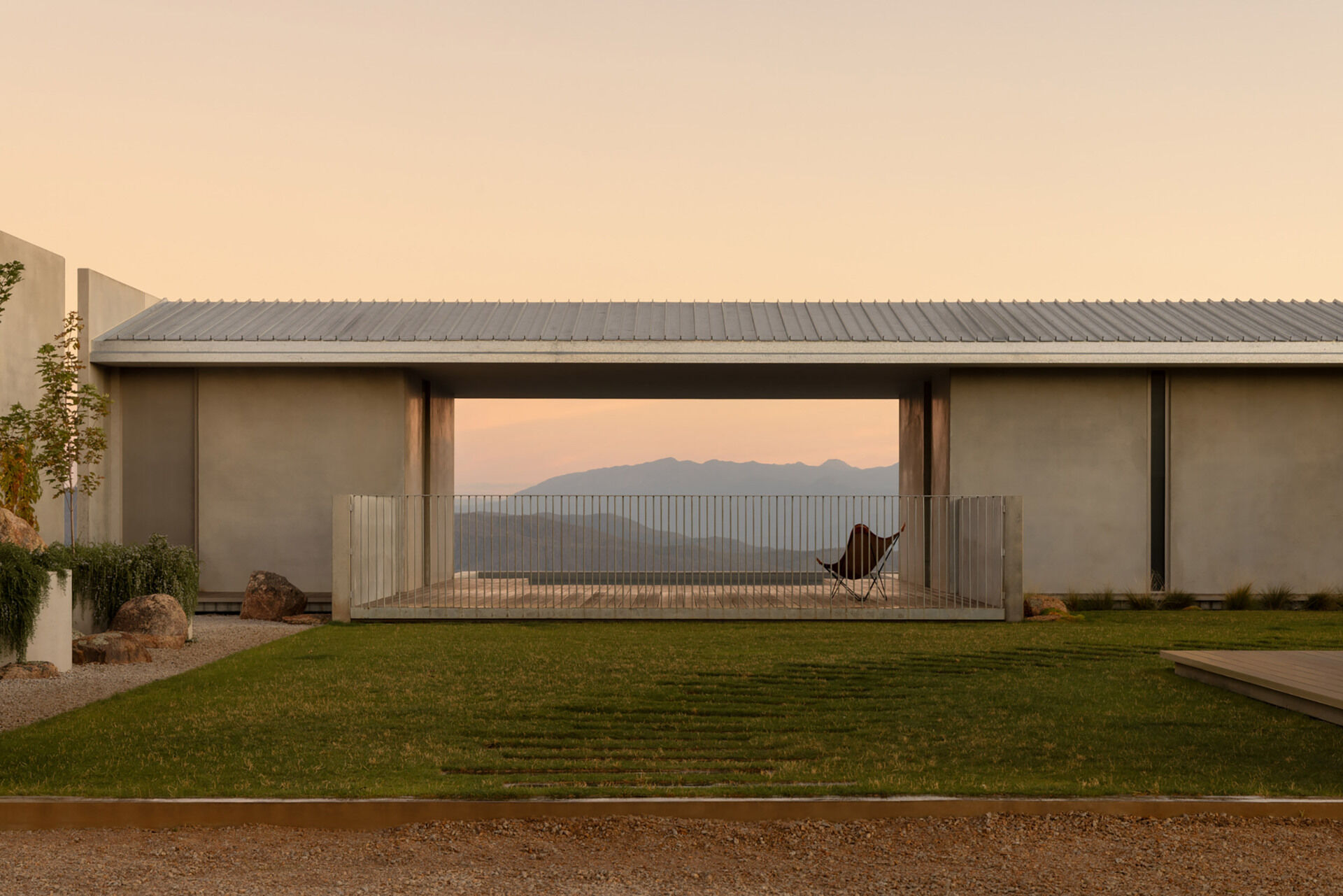
A courtyard-centered residence by Schmölzer Architecture on the Murmungee Escarpment near Beechworth, oriented to panoramic valley and Mount Buffalo views.

The Oversized Window That Changed Everything in This French Chalet
Chevallier Architectes
In Chamonix-Mont-Blanc, Chevallier Architectes renovated a family chalet with maximum-size glazing, refined materials, and upgraded building systems while prese…

Elemental: A Sculptural Retreat in the Woods
OPAL Architecture
Elemental by OPAL Architecture is a modern home in Maine, blending dark exteriors with light-filled interiors, designed for a family of four.
Projects by the architect
View Feldman Architecture
Stone Villa
Feldman Architecture
A multi-pavilion stone residence near Carmel that steps with a ridgeline, pairing local stone and reclaimed teak with outdoor rooms, gardens, and framed valley…
Stone Villa
Feldman Architecture
Nestled in the Santa Lucia Preserve, Stone Villa by Feldman Architecture blends modern design with the rustic charm of Tuscan villas, creating a harmonious retr…
Bend Hideaway
Feldman Architecture
Nestled in Bend, Oregon, Bend Hideaway by Feldman Architecture is a modern residence that harmonizes with its forested surroundings, offering expansive views an…