

The striking black brick and cedar exterior of Tarrytown Residence surrounded by lush landscaping.
Story
A private Austin residence where contemporary architecture shapes light, landscape, and privacy
Project Overview
As a contemporary architecture, the project is documented here through its site response, spatial organization, material strategy, and architectural details.
Set in Austin’s Tarrytown neighborhood of traditional post-war houses, this residence by Alterstudio Architecture with interiors by The Renner Project is a precise exercise in contemporary architecture that balances privacy and openness. A restrained street presence gives way to a sequence of gardens and glass-lined rooms, establishing a private world organized around courtyards and curated views. Two sculptural volumes clad in long-format black brick and ebony-stained cedar define the home’s outward character, while large site-glazed openings draw daylight deep into living spaces. The plan concentrates activity around a central courtyard and a walled garden, enabling sustained engagement with the outdoors without sacrificing seclusion.
The striking black brick and cedar exterior of Tarrytown Residence surrounded by lush landscaping.
Site and Urban Context
The house occupies a residential parcel within Tarrytown, surrounded by modest, post-war homes. From the street, a walled garden and a measured façade minimize exposure to neighboring properties. Entry unfolds beneath a mature Live Oak, softening the transition from public to private and introducing the project’s choreographed sequence of views and courtyards—an approach aligned with the clarity of a courtyard house typology.

Steps leading to the main entrance of the house, framed by lush greenery.
Contemporary Architecture and Design Concept
The design establishes a protective perimeter and a luminous interior world. Two primary masses frame outdoor rooms, while a continuous ceiling plane promotes visual continuity across discrete spaces. An unexpected monitor opening at the heart of the plan brings top light into the center of the house, deepening the interplay between interior volumes and the surrounding tree canopy. Horizontal organization is counterbalanced by a two-story screened porch that introduces vertical emphasis and links multiple levels.
Spatial Organization
Interiors are structured around a central courtyard, ensuring gardens are a near-constant presence. Living, dining, and kitchen spaces maintain extended sightlines through the glass-lined courtyard, while the curved breakfast nook sits along this connective axis with direct access to light and landscape. A library, music room, and an elevated bridge participate in a larger composition anchored by the tall screened porch. The staircase is treated as a spatial event: daylight from tall windows animates its white planes, complemented by a sculptural installation running alongside timber treads and dark vertical detailing.

A serene view of the pool area framed by high-quality landscaping and modern architecture.
Materials and Facade
The exterior is defined by long-format black brick (Corso Brick by S. Anselmo) and ebony-stained cedar cladding from Delta Millworks, supported by custom steel fascia and facade elements by Drophouse Design. Large custom site-glazed window walls use minimal framing to keep the building’s expression focused and refined. Inside, white oak flooring provides warmth, while honed Absolute Black granite adds contrast in the kitchen, paired with custom millwork by Tim Cuddy Cabinetry.
Light, Climate, and Atmosphere
Expansive glazing opens primary rooms to gardens, creating consistently light-filled spaces throughout the day. The central monitor introduces controlled top light and framed canopy views, while the two-story screened porch provides a protected, open-air environment on the eastern side. Together, these elements modulate light and exposure, maintaining a calm interior atmosphere across seasons.

A cozy living area blending comfort with contemporary design.
Design Highlights
Two sculptural volumes clad in long-format Corso black brick and ebony-stained cedar Custom steel fascia and facade detailing by Drophouse Design Central courtyard plan with site-glazed window walls and minimal framing Entry sequence choreographed beneath a mature Live Oak and into a walled garden Daylit monitor opening at the plan’s center with canopy views Two-story screened porch with custom steel detailing, adding vertical emphasis Continuous ceiling plane reinforcing visual flow across living spaces Kitchen palette of white oak flooring, honed Absolute Black granite, and precise custom millwork

Key Facts
| Field | Details |
|---|---|
| Project | Tarrytown Residence |
| Architect | Alterstudio Architecture |
| Location | Austin, Texas, USA |
| Year | — |
| Status | Built |
| Program | Single-family residence |
| Main Materials | Long-format black brick (S. Anselmo Corso), ebony-stained cedar (Delta Millworks), custom steel, site-glazed glass, white oak flooring, Absolute Black granite |
| Keywords | contemporary architecture, courtyard house, black brick, cedar cladding, light-filled spaces |
Frequently Asked Questions
What defines the exterior character of the house?
Two primary volumes are clad in long-format black brick and ebony-stained cedar, with custom steel fascia and facade elements refining the overall composition.
How is the plan organized around courtyards?
A central courtyard anchors living spaces, establishing strong visual connections across rooms while preserving privacy from neighboring properties.
What role does the two-story screened porch play?
Located on the eastern side, the screened porch adds vertical scale and creates a protected outdoor living environment that links multiple levels.
How does the house bring daylight into the center?
In addition to large site-glazed window walls, a monitor opening above the plan’s center introduces top light and frames views of the tree canopy.
Technical Summary
Material Strategy
The project relies on a contextual material palette chosen for tactile clarity and durability:
| Material | Application |
|---|---|
| Black Brick | Exterior cladding |
| Cedar | Exterior siding |
| Concrete | Landscaping features and steps |
| Glass | Window walls and patio overlooking the pool |
| Wood | Door and various elements in the interior |
| Metal | Custom steel detailing in the screened porch |
Facade and Envelope
- Exterior Walls: Two sculptural volumes clad in long-format black brick and ebony-stained cedar siding.
Structure and Construction
- Window Systems: Large custom site-glazed window walls open the interiors toward gardens.
Interior Finishes
- Flooring: White oak flooring provides warmth underfoot.
- Countertops: Honed Absolute Black granite introduces contrast and durability.
- Wall Covering: Vibrant floral wallcovering wraps the dining room in color and pattern.
- Ceiling: A continuous ceiling plane reinforces visual flow throughout the home.
Lighting and Atmosphere
Colors: Black, Ebony-stained, Warm timber, Vibrant floral. Lighting: Natural light from large windows and architectural openings..
Products and Manufacturers
- Cabinetry: Custom millwork by Tim Cuddy Cabinetry (used for Kitchen cabinetry reflecting precision and material quality.)
Project information and images courtesy of Alterstudio Architecture. Originally published by contemporist.com.
Similar projects
More houses
Casa na Comporta
Sabrab Architecture
An L-shaped, white-plastered villa in Comporta by Sabrab Architecture, organized around a protected courtyard with retractable glazing and a central pool.

The Oversized Window That Changed Everything in This French Chalet
Chevallier Architectes
In Chamonix-Mont-Blanc, Chevallier Architectes renovated a family chalet with maximum-size glazing, refined materials, and upgraded building systems while prese…

Interwoven Landscapes: A Phenomenological Retreat
Atelier Carle
A secondary residence in Quebec, designed by Atelier Carle, merges concrete and timber to create a harmonious dialogue with the natural landscape.
Eyrie Residence: Modern House Design on the Murmungee Escarpment
Schmölzer Architecture
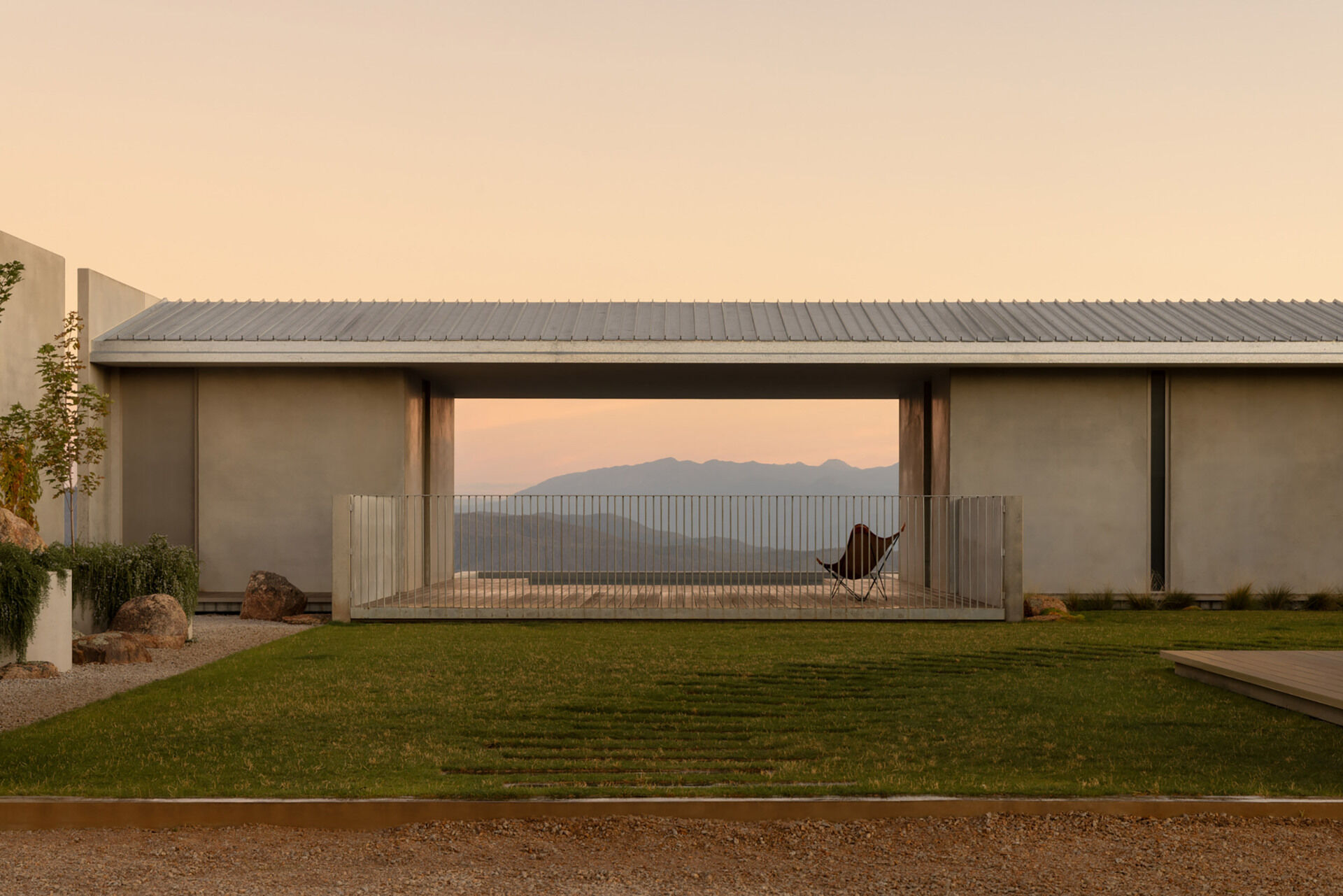
A courtyard-centered residence by Schmölzer Architecture on the Murmungee Escarpment near Beechworth, oriented to panoramic valley and Mount Buffalo views.

Amagansett House
Bates Masi + Architects
A family house in Amagansett by Bates Masi + Architects, organized as interlinked gabled volumes with weathered shingles, thatch infill, breezeways, and warm na…

Elemental
OPAL Architecture
Elemental, designed by OPAL Architecture, is a sculptural modern home in Maine blending dark charred wood exteriors with bright, airy interiors.
Projects by the architect
View Alterstudio Architecture Tarrytown Residence
Alterstudio Architecture
A modern home in Austin's Tarrytown neighborhood, defined by its bold black brick and cedar exterior, conceals a light-filled interior centered around courtyard…