

The home blends seamlessly with its forested environment, featuring cascading green roofs and natural materials.
Story
A compact forest home where contemporary architecture is articulated through planted roofs, copper, and crafted Douglas fir.
Project Overview
Bricault Design’s Whistler Hideaway is a compact single-family residence in Whistler, British Columbia, that positions contemporary architecture against a steep, conifered slope. The 1,268-square-foot home concentrates craft and material expression—cascading green roofs, copper detailing, and edge-grain Douglas fir—into a precise, site-led composition.
Led by Marc Bricault, the project draws on regional fabrication and woodworking to integrate architecture, interiors, and custom furniture. A deep, copper-framed cantilevered window seat, a floating stair tied to a custom rail system, and concealed storage strategies support a restrained plan that reads larger than its footprint.
The home blends seamlessly with its forested environment, featuring cascading green roofs and natural materials.
Site and Urban Context
Set into the forested hills of Whistler, the house follows the contours of a rocky escarpment, surrounded by conifers and open mountain views. Layered planted roofs step with the terrain, sheltering a carport and covered walkways while visually fusing the structure with mossy outcrops. Comparable attention to landscape can be seen in Contemporary Vernacular, where topography and material continuity shape the building’s presence.
Design Concept in Contemporary Architecture
The design advances a strategy of layered planes and protected passages. Green roofs cascade to form interlocking bands that register slope and movement, while copper elements mark apertures and thresholds—most legibly at the cantilevered living-room window. Inside, the same copper reappears as accents, reinforcing continuity across the envelope and interior.
Circulation is choreographed along covered paths that toggle between enclosure and exposure, framing rock, forest, and far views. The orchestrated indoor–outdoor routes recall the emphasis on movement in Bamboo Pathways.

A cozy nook with an oversized window, framed in copper, offers views of lush greenery.
Spatial Organization
The ground level consolidates entry, kitchen, dining, and living around continuous Douglas fir millwork. Hidden doors disappear into flush wall panels, concealing the pantry, powder room, and mechanical room. A custom dining table with fluted and turned legs anchors the dining zone, while a glazed ceramic tile fireplace in the living area serves as a secondary heat source.
A deep, Douglas fir–lined window seat projects from the living room, creating a quiet vantage point to the trees and mountains. Above the fireplace, floating Pacific madrone treads rise to the upper floor, suspended from a custom rail system that also supports shelving and, upstairs, bedside elements for the primary suite. The entire upper level is dedicated to the bedroom and ensuite, elevated within the canopy to capture views.

Elegantly designed staircase with floating treads and integrated shelving.

Interior kitchen view showcasing wood finishes and natural light streaming through the window.

Cozy living room featuring a plush seating area and a view into lush greenery.
Materials and Facade
Exteriorly, planted roofs, copper accents, and natural wood and stone finishes present a restrained palette calibrated to climate and context. The copper-framed living-room aperture reads as a precise insertion in the facade, mirrored by copper details within.
Interiors are unified by edge-grain Douglas fir across soffits, ceilings, cabinetry, and the window seat. The stair’s Pacific madrone treads and the integrated rail system operate as a crafted armature for movement and storage. In the primary bedroom, copper screens etched with Japanese floral patterns by Vancouver printmaker Peter Braune flank the headboard, extending the copper language into the private realm.
A Canadian context-led approach to material expression also underpins Interwoven Landscapes.
Light, Climate, and Atmosphere
Large windows register the immediate rock face, moss garden, and forest canopy, sustaining a continual visual connection to site. The compact powder room leverages a view window to the rock outside, pairing daylight with crafted green tile and a form-bent Douglas fir mirror frame.
The layered green roofs add protection in snowy winters and warmer summers, while covered walkways temper transitions between exterior and interior. Throughout, material warmth and calibrated apertures establish a steady, low-glare interior light quality that amplifies the perceived volume of the compact plan.
Design Highlights
- Layered Planted Roofs Follow The Mountainside, Sheltering Carport and Walkways While Visually Anchoring The House To The Rocky Slope.
- Copper Framed, Cantilevered Living Room Window Projects Into The Landscape To Frame Uninterrupted Mountain and Forest Views.
- Continuous Edge‑grain Douglas Fir Unifies Soffits, Ceilings, Cabinetry, Doors, and The Deep Window Seat.
- Floating Pacific Madrone Stairs Hang From A Custom Rail System That Also Supports Shelving and Bedroom Furniture Elements.
- Concealed Doors Integrate Pantry, Powder Room, and Mechanical Spaces Into Flush Douglas Fir Wall Planes.
- A Glazed Ceramic Tile Fireplace Serves As A Secondary Heat Source in Colder Months.
- Primary Suite Occupies The Entire Upper Level Within The Tree Canopy, With Etched Copper Headboard Screens By Peter Braune.
- Arrival Is Choreographed Via Covered, Green Roofed Pathways That Alternate Between Enclosure and Open Mountain Views.
Key Facts
| Field | Details |
|---|---|
| Project | Whistler Hideaway |
| Architect | Bricault Design (Principal: Marc Bricault) |
| Location | Whistler, British Columbia, Canada |
| Program | Single-family residence; one bedroom and 1.5 bathrooms across two levels |
| Main Materials | Douglas fir, copper, natural stone, glass, planted green roofs |
| Status | Built |
| Keywords | contemporary architecture, Sustainable Architecture, Modern Home, Compact House |
Frequently Asked Questions
What is the size of Whistler Hideaway?
The home measures 1,268 square feet (118 square meters), arranged across two levels.
How many bedrooms and bathrooms does the house include?
It contains one bedroom and one-and-a-half bathrooms, with shared living spaces on the lower level and the primary suite above.
Which materials define the project?
Key materials include Douglas fir for millwork and ceilings, copper accents inside and out, natural stone, glass, planted green roofs, Pacific madrone stair treads, and glazed ceramic tile at the fireplace.
Technical Summary
Material Strategy
| Material | Application |
|---|---|
| Copper | Exterior accents and interior detailing |
| Douglas Fir | Cladding, cabinetry, and furniture |
| Green Tile | Powder room finishes |
| Wood | Cabinetry and millwork integration |
| Ceramic Tile | Fireplace surround |
Structure and Construction
- Cascading Green Roofs: Green roofs shelter the carport and pathways while aiding in energy efficiency.
- Integrated Rail System: Supports floating stairs and connects multiple elements into a cohesive design.
Interior Finishes
- Natural Finishes: Warm natural finishes that mirror the forests of British Columbia.
- Sculptural Details: Form-bent Douglas fir mirror frame handcrafted with sculptural curves.
Lighting and Atmosphere
Colors: Moss Green, Copper, Warm Brown. Lighting: Natural light from large windows.
Products and Manufacturers
- Furniture: Custom Dining Table by Collaboration with Ted Belch (used for Dining area centerpiece).
Project information and images courtesy of Bricault Design. Originally published by contemporist.com.
Similar projects
More houses
The Oversized Window That Changed Everything in This French Chalet
Chevallier Architectes
In Chamonix-Mont-Blanc, Chevallier Architectes renovated a family chalet with maximum-size glazing, refined materials, and upgraded building systems while prese…

Bridge House
Vallely Architecture
A modern family home in North Vancouver featuring oversized rooflines and a dramatic bridge connecting outdoor and indoor spaces.

The Albatross
MU Architecture
The Albatross, designed by MU Architecture, is a striking residence in Québec's Laurentians, seamlessly integrating with its rugged landscape through a series o…

Amagansett House
Bates Masi + Architects
A family house in Amagansett by Bates Masi + Architects, organized as interlinked gabled volumes with weathered shingles, thatch infill, breezeways, and warm na…
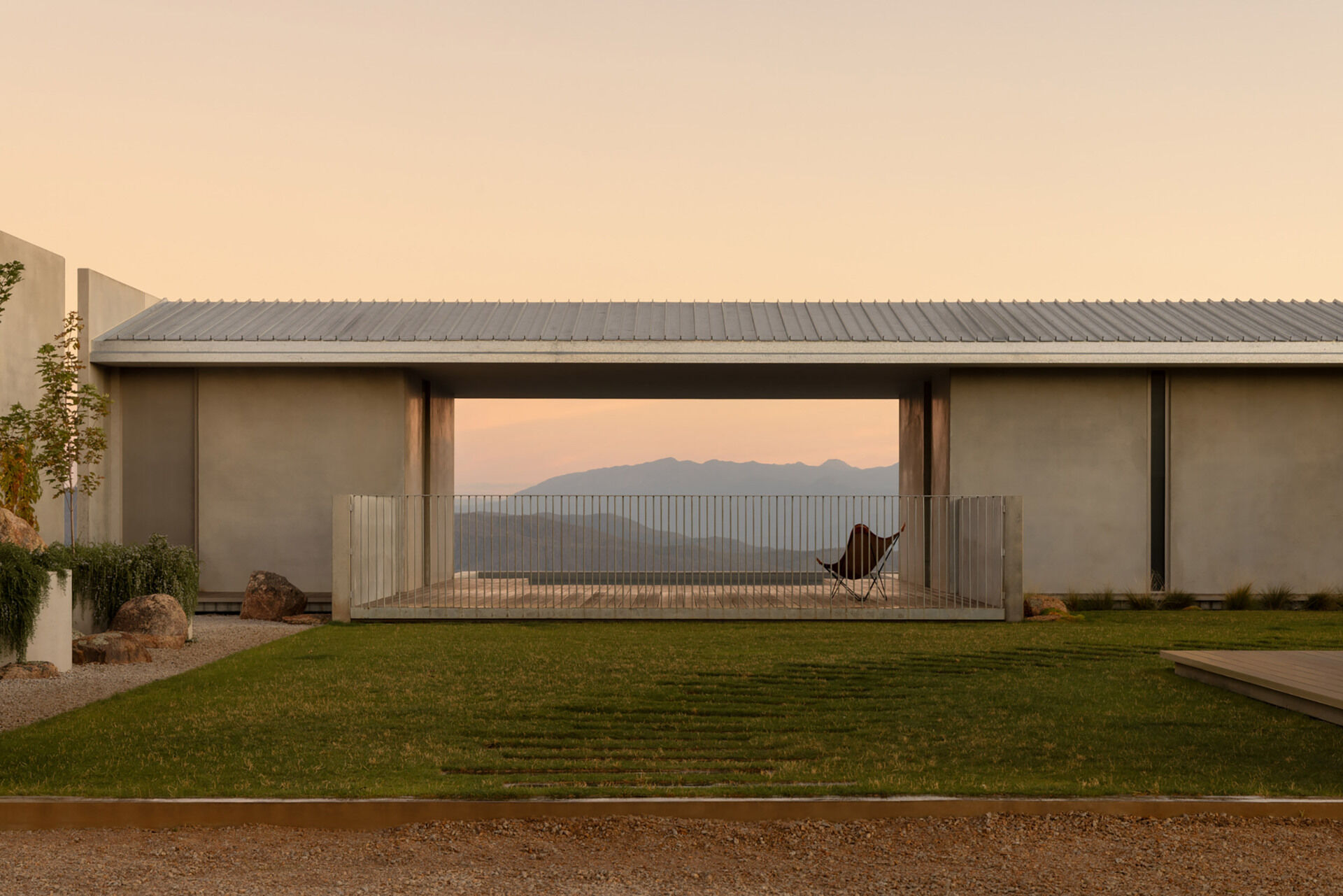
Eyrie Residence: Modern House Design on the Murmungee Escarpment
Schmölzer Architecture
A courtyard-centered residence by Schmölzer Architecture on the Murmungee Escarpment near Beechworth, oriented to panoramic valley and Mount Buffalo views.

Secluded Harmony: A Modern Family Retreat
KONKRET Studio
Nestled between a walnut grove and open fields in Ullo, Hungary, this modern home by KONKRET Studio offers a serene retreat wrapped in black corrugated fiber-ce…
Projects by the architect
View Bricault Design Whistler Hideaway
Bricault Design
Nestled in Whistler's forested hills, this compact home by Bricault Design features cascading green roofs, etched copper accents, and custom woodwork, harmonizi…