

Exterior view of the modern home showcasing its striking concrete structure.
Story
A multi-level house design that calibrates concrete, gardens, and light on a sloping Sydney site
Project Overview
As a house design, the project is documented here through its site response, spatial organization, material strategy, and architectural details.
This house design by Manolev Architects in Sydney’s Lower North Shore organizes strong concrete forms around gardens and filtered natural light. A thick cantilevered kitchen island sets a sculptural tone inside, while a floating concrete deck projects into a palm canopy outside. Across its levels, the home frames views to planting and incorporates a swimming pool aligned for sunlight and privacy.
Exterior view of the modern home showcasing its striking concrete structure.
Set toward the rear of an irregular, sloping site, the residence preserves mature Bangalow palms as a defining foreground. Interiors maintain a restrained palette—concrete walls, limestone tiled floors, sandblasted travertine, and black cabinetry—allowing light and greenery to modulate the atmosphere throughout the day. Related explorations of material and landscape can be seen in Interwoven Landscapes and the Australian Rammed Earth Retreat.
Site and Urban Context
The house responds to an irregular, sloping parcel on Sydney’s Lower North Shore. Retaining the mature Bangalow palms at the front, the building steps back to form a generous garden threshold. A curved approach path threads through the planting to create a measured arrival.

Plant-filled garden surrounding the home, creating a lush ambiance.
A floating concrete deck projects beneath the palm canopy, extending the ground plane and establishing an outdoor platform connected to the living spaces. The rear garden consolidates outdoor amenity, where the pool sits alongside main glazing to capture sunlight while preserving privacy from neighbors. For more projects emphasizing planted thresholds and outdoor rooms, see our tag on gardens.
House Design Concept
The design works as a series of calibrated frames and planes. Two sculptural anchors—the cantilevered kitchen island and the floating deck—signal a broader interest in mass and suspension within domestic space. Openings are sized to admit daylight and to place vegetation in direct dialogue with interior surfaces. For additional references to structural projection, browse cantilever.

A minimalist kitchen featuring a floating concrete island and sleek cabinetry.
Spatial Organization
The sloping site produces a multi-level interior linked by concrete and timber staircases. A double-height living room forms the spatial core, with full-height glazing on opposing sides establishing visual connections to the front palms and a rear valley view. Folding doors open to the deck, and picture windows capture views of planted rooftop gardens.

Bright living area with large windows flooding the space with natural light.
Circulation is arranged to keep long sightlines between levels, allowing light to move through the plan. Living areas align closely with outdoor spaces, while private rooms gain controlled apertures to greenery.
Materials and Facade
A consistent interior palette—cast concrete walls, limestone tiled floors, and sandblasted travertine wall cladding—creates a tactile, subdued backdrop. Black cabinetry sharpens the kitchen’s profile around the cantilevered island, and timber stair elements introduce measured warmth against the mineral surfaces. Extensive glazing is deployed as full-height panels, folding openings, and picture windows.
Light, Climate, and Atmosphere
Daylight is a central actor. Large panels of glazing, three strategically placed skylights, and picture windows pull light deep into the home. The front palms filter sun to soften concrete and stone textures, while the pool’s placement merges water reflections with interior views. Across the day, shifting light accentuates surface relief and frames layers of planting.

Design Highlights
Thick, cantilevered kitchen island forming a sculptural centerpiece and informal seating edge Floating concrete deck extending beneath mature palm canopies at the front garden Double-height living room with full-height glazing on two sides for cross-views to landscape Swimming pool aligned along main living glazing for sunlight capture and privacy Multi-level plan responding to a sloping, irregular site with linked indoor-outdoor terraces Concrete and timber stairways that stitch levels while introducing material warmth Picture windows oriented to planted rooftop gardens and dense rear planting Interior finishes of concrete, limestone tiles, and sandblasted travertine for cohesive materiality
Key Facts
| Field | Details |
|---|---|
| Project | Inside a Sydney Home: House Design With a Gravity-Defying Kitchen Island |
| Architect | Manolev Architects |
| Location | Sydney, Lower North Shore, Australia |
| Year | — |
| Status | Built |
| Program | Single-family house; kitchen; living room; bathroom; swimming pool; garden |
| Main Materials | Concrete; limestone tile; sandblasted travertine; timber; glass |
| Keywords | house design; cantilevered kitchen island; floating concrete deck; double-height living room; skylights; indoor-outdoor connection; sloping site; Bangalow palms |
Frequently Asked Questions
Who designed the house?
Manolev Architects led the architecture and interior design.
Where is the project located?
It is in Sydney, on the Lower North Shore of Australia.
What materials define the interior palette?
Concrete walls, limestone tiled floors, and sandblasted travertine are primary, with black cabinetry and timber stair elements.
What is notable about the kitchen?
A thick, cantilevered island acts as a sculptural focal point and provides seating for two stools.
How does the design handle natural light?
Full-height glazing, picture windows, and three skylights draw daylight into the interiors and frame garden views.
How is the swimming pool positioned?
Alongside the main living room glazing to capture sunlight while maintaining privacy from neighboring properties.
Technical Summary
Material Strategy
The project relies on a contextual material palette chosen for tactile clarity and durability:
| Material | Application |
|---|---|
| concrete | Structural walls, floating deck, kitchen island, and stair components |
| limestone tile | Interior flooring |
| travertine (sandblasted) | Interior wall cladding and textured surfaces |
| glass | Full-height glazing to double-height living room, large picture windows, and glazed folding doors |
| timber | Staircase elements |
| black cabinetry | Kitchen storage fronts creating a sleek palette |
Facade and Envelope
- Full-height glazing with folding doors: Double-height living room uses glazing across both sides; folding doors open directly to the floating deck for indoor–outdoor connection.
Structure and Construction
- Concrete structural system: Concrete walls define the bold architecture across multiple levels and provide a cohesive material language.
- Cantilevered concrete deck: A floating concrete deck extends outward beneath the palm canopy, transitioning seamlessly between architecture and garden.
- Cantilevered kitchen island: A thick island with an oversized countertop that appears to float, projecting to provide stool seating.
- Multi-level circulation via concrete and timber stairs: The sloping site is navigated with staircases that mix concrete and timber to maintain a minimalist aesthetic while adding warmth.
- Daylighting with skylights and picture windows: Three large skylights and oversized windows bring filtered natural light inside and frame planted rooftop gardens.
- Pool integration with living spaces: Swimming pool placed alongside living room glazing to maximize sunlight and maintain privacy; water becomes part of interior views.
- Landscape and site strategy: House positioned toward the rear to preserve mature Bangalow palms; front landscaping shaped around existing root systems with a curved entry path.
Interior Finishes
- flooring: Limestone tiled flooring throughout living spaces
- wall cladding: Travertine wall cladding with sandblasted finish
- cabinetry: Black cabinetry in the kitchen
- kitchen island: Thick cantilevered, floating concrete island as sculptural centerpiece
- window frames: Black window frames in the bathroom
- wall finish (bathroom): Dark accent wall for contrast with lighter surfaces
- exterior deck: Floating concrete deck extending outward beneath the palm canopy
- stairs: Combination of concrete and timber stair finishes
Lighting and Atmosphere
Colors: black (cabinetry), black (window frames), dark accent wall, concrete, limestone, travertine. Lighting: Filtered natural light via full-height glazing, large picture windows, and three skylights; nighttime exterior lighting emphasizes architecture and landscaping..
Project information and images courtesy of Manolev Architects. Originally published by contemporist.com.
Similar projects
More houses
Du Corail Residence
Entre Quatre Murs
A three-level residence in Mirabel defined by stone, wood, and glass, with a glazed wine room on the main floor and a daylighted lower-level games room.

St Kilda West Federation House
Lucy Clemenger Architects
An 1890s Federation house in St Kilda West is reworked with a white-toned timber addition, open-plan living, and refined materials while retaining heritage room…

This Portland Bathhouse Was Built on the Footprint of a 100-Year-Old Carriage House
Ment Architecture
Ment Architecture replaces a deteriorated carriage house footprint in Portland’s Alameda neighborhood with a cedar-clad backyard bathhouse designed for year-rou…
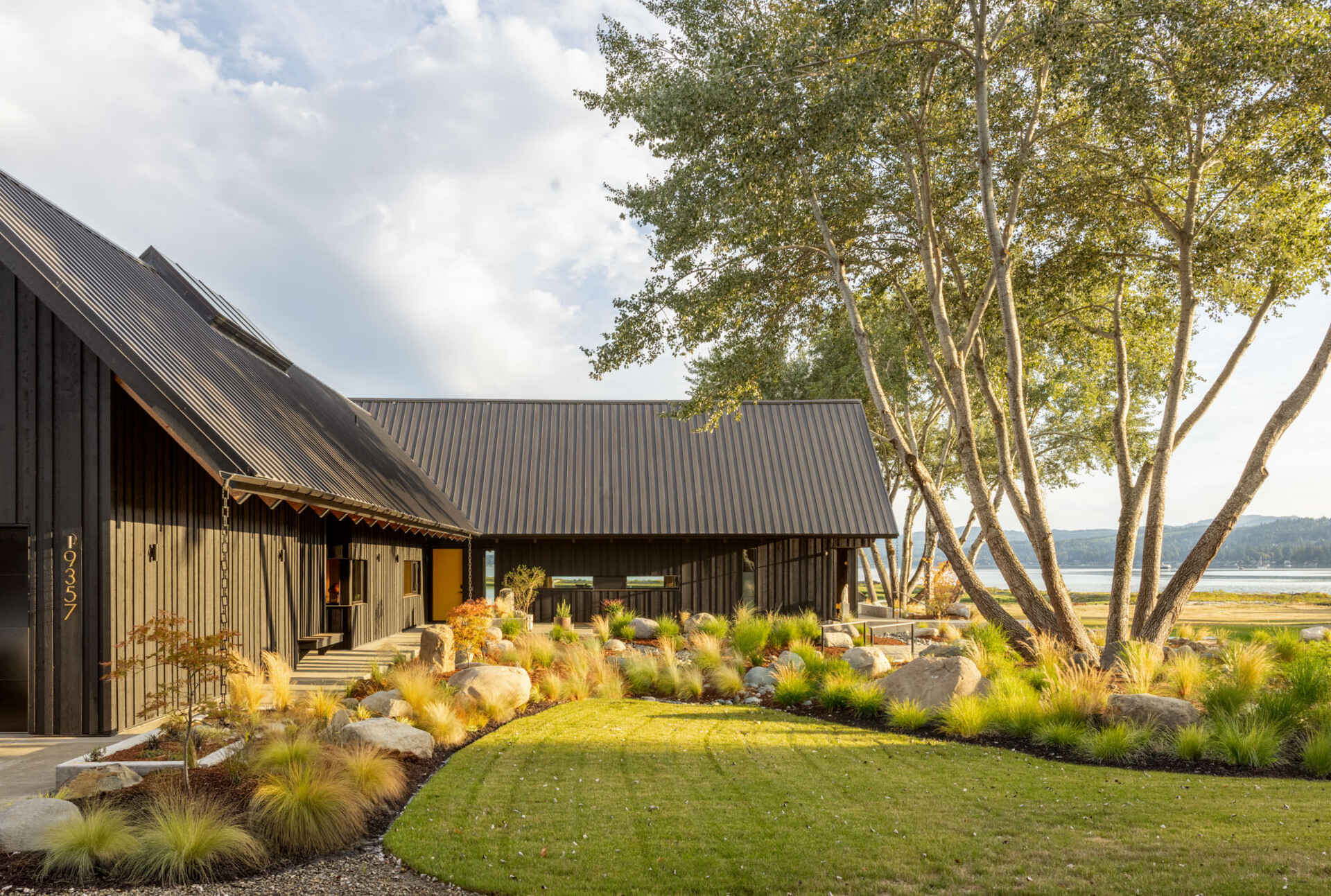
Dyes Inlet House
SHED Architecture & Design
A T-shaped residence by SHED Architecture & Design overlooking Dyes Inlet in Silverdale, Washington. The home adopts Scandinavian references, Pacific Northwest…

Single-Family House Among the Trees . Podkowa Leśna
MFRMGR
A harmonious residence tucked within the trees of Podkowa Leśna, merging architecture with nature.

Amagansett House
Bates Masi + Architects
A family house in Amagansett by Bates Masi + Architects, organized as interlinked gabled volumes with weathered shingles, thatch infill, breezeways, and warm na…
Projects by the architect
View Manolev Architects Gravity and Light: A Sydney Home's Architectural Dance
Manolev Architects
A Sydney home by Manolev Architects merges bold concrete forms with lush gardens and dynamic light, featuring a striking cantilevered kitchen island.